The Chairperson of the National Council of Provinces (NCOP) Ms Refilwe Mtshweni-Tsipane has called for improved cooperation between the three spheres of government – national, provincial, and local – for better service delivery to improve the lives of the people.
Delivering the opening address of the Local Government Week session currently underway in Cape Town, Ms Mtshweni-Tsipane said the NCOP has brought together key stakeholders for a dialogue on the state of local government and trying to find solutions to challenges faced by municipalities.
“We have a clear intention of addressing and resolving the ongoing challenges faced by our municipalities in service delivery, as a vital step towards restoring the dignity of all our people as envisaged in our Constitution,” she said.
The NCOP Chairperson believes that all three spheres of government must come together to pay attention to the challenges facing the local government sphere. “The Constitution requires the three spheres of government to cooperate with one another in mutual trust, in good faith, including providing the necessary support needed,” said the Chairperson.
She also commended the transformation of the local government sphere from a system that was originally designed to enforce apartheid-era spatial segregation and separate development among different communities and racial groups to a new municipal system with distinct objectives and developmental agenda.
“Over the last 30 years, local government has played a central role in mobilising and coordinating government services that are aimed at improving the overall quality of life for all our people,” she said. Despite these efforts, she added, the local government sphere continues to face persistent challenges arising from structural, social, economic, political, institutional, environmental and legal factors.
“Spatial development in South Africa and particularly in the City of Cape Town continues to reflect profound inequalities, township and rural areas face rampant crime, entrenched poverty, substance abuse and limited development opportunities compared to the more affluent and semi-urban neighborhoods. This enduring legacy places enormous pressure on local government to ensure that all people have access to basic necessities such as water, sanitation, electricity, roads, housing, spatial planning and other essential infrastructure,” the NCOP Chairperson said.
Local Government Week is held in collaboration with the South African Local Government Association (SALGA) and other relevant stakeholders to seek strategies that will strengthen local government structures, improve service deliver and enhance the quality of life for all citizens.
The Chairperson was also concerned about the municipal debt to Eskom and water boards and hoped the Local Government Week discussions will produce lasting solutions to the challenges of municipal debt. These debts undermine the financial viability of municipalities and impact on their capacity to fulfill their strategic objectives.
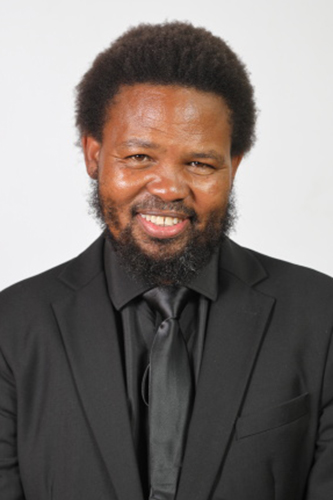
The Department of Cooperative Governance and Traditional Affairs’ Prince Zolile Burns-Ncamashe said that his department has introduced a debt relief solution to the problem of debt owed to ESKOM and the water boards. He warned, however, that these were not bailouts, but lifelines tied to reforms and provide opportunities for the municipalities to reset, rebuild and restore their financial health.
“As of March 2023, our municipalities owed Eskom R58,85 billion and government approved R55,3 billion in relief with 71 municipalities qualifying and 24 have already received the first cycle write-off of R4 billion,” said the Deputy Minister.
He urged the NCOP and other stakeholders that local government cannot be left to crumble while the people suffer, adding that every municipality must be supported, capacitated and stabilised and made to work. “When municipalities fail, democracy itself is undermined. When municipalities stumble, national and provincial governments must step in not to take over but to support, guide and stabilise – in terms of section 154 of the Constitution,” he said.
The Deputy Minister believes that that despite the improvements in recent years, the state of local government in South Africa needs a sharp focus for the achievement of integrated service delivery.
Among the improvements mentioned by the Deputy Minister is the increased number of stable municipalities from 30 in 2022 to 61 in 2023, distressed municipalities were reduced from 66 to 35.
He attributed this progress to the success of targeted interventions by national and provincial governments. “But let us not sugarcoat matters. The majority of municipalities, 161 or 63 %, are at risk. Governance instability, financial distress, poor audit outcomes and failing infrastructure continue to hold communities back. We must be honest that while some indicators show progress, for many households the daily lived reality remains unchanged,” the Deputy Minister warned.
He also told the session that grants and interventions will not bring change in municipalities without competent mayors, councillors and speakers as they are the custodians of service delivery and stewards of public trust.
“Municipalities must also have qualified managers, chief financial officers and technical directors, without these no grant, no intervention and no plan can succeed,” he said.
The Deputy Minister suggested that to truly integrate service delivery, the country needs “one plan, one budget and one implementation strategy”, which is among the key objectives of the District Development Model.
Sakhile Mokoena
17 September 2025
 Arrange a tour