


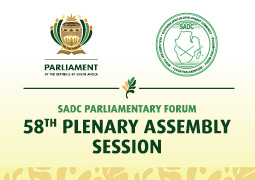
Southern Africa’s vulnerability to climate-induced natural hazards is far from being a matter of theoretical abstraction; it is a lived reality. The Southern African Development Community Parliamentary Forum (SADC PF) has proclaimed this concerning fact ahead of its 58th Plenary Assembly.
The SADC PF will convene this weekend in Durban, South Africa, where it will deliberate on the impact of climate change and how regional parliaments could work collaboratively on mitigation and adaptation strategies for climate action. The theme for the week-long discussions is: “The impact of climate change in the SADC region and the role of Parliaments in climate change mitigation and adaptation”.
The concept document that had been prepared for the gathering highlighted weakness with the current regional approach to climate action and also identified that there is a lack of coordination.
“The absence of binding regional frameworks for coordinated climate action further limits collective resilience. Admittedly, climate change is no longer a distant threat but a present and escalating crisis in the SADC region and that underscores the urgent need for SADC PF members to address climate change collectively – as a moral responsibility,” the concept document states.
The 58th Plenary Assembly happens a week after the Belem COP 30 (Brazil) deliberations concluded, without resolutions, but commitment to the nationally determined contributions (NDCs). In simply language, NDCs are a measure used to curb the addition of undesirable gases to the atmosphere as determined by nations but reported on at COP gatherings regularly. These were the highlight of the Paris Agreement.
Although SADC member states are party to global frameworks such as the Paris Agreement, effective implementation at national and sub-national levels remained a challenge, lamented the concept document. According to the concept document, the 58th Plenary Assembly will not only serve as a platform for sharing of insights and perspectives but also as an avenue to engage in more structured and strategic deliberations on how regional parliaments can, among others, enact climate-resilient legislation and policies.
The 58th Plenary Assembly is taking place in Durban, a city ravaged by recent floods in 2023 where over 500 people died and many more went missing. Other South African cities affected by intense floods are Rustenburg (2023) and Mthatha (2025).
Despite the strong global scientific consensus and the nature of the problem, current climate commitments and actions worldwide are significantly inadequate, the concept document states.
Even if all nations fully implement their existing NDCs, their self-imposed climate targets, the world will still face a catastrophic temperature increase of up to 3.1 degree C by 2100. The internationally agreed target to keep the global temperatures rise below 1.5 degrees C if pre-industrial levels is becoming more challenging to achieve.
Member states to the SADC are, Angola, Botswana, the DRC, eSwatini, Lesotho, Madagascar, Malawi, Mauritius, Mozambique, Namibia, Seychelles, South Africa, Tanzania, Zambia and Zimbabwe.
From intensified droughts, floods and cyclones to changing rainfall patterns and biodiversity loss, climate change has emerged as a direct threat to food security, public health, water availability, energy systems and overall economic growth in the SADC region,” concluded the concept document.
The Speaker of the National Assembly, Ms Thoko Didiza, will lead South Africa’s strong delegation to the 58th Plenary Assembly. Durban was the first African city to host the Conference of Parties (COP 17) meeting in 2011.
Sibongile Maputi
28 November 2025
 Arrange a tour