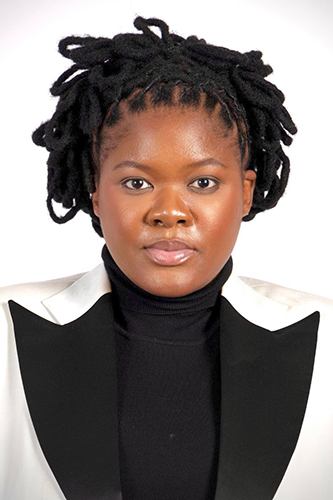



The Minister of Water and Sanitation, Ms Pemmy Majodina, tabled the department’s budget vote for debate in a mini plenary of the National Assembly on 11 July.
She told Members of Parliament that the department plans to use the R134 billion allocation to ensure that water availability does not become a constraint on investment and economic growth, and that there is sufficient water to meet the needs of the population, as mandated by the Constitution.
Ms Majodina outlined three priorities for the department in this term of government. “We will invest in additional water resource infrastructure to capture the remaining 25% of exploitable surface water resources. Secondly, we will diversify the water mix, and increasingly make use of other sources of water, including the sustainable use of groundwater, water re-use, and desalination,” she explained.
“We will also implement more effective water conservation and demand management programmes to bring our water consumption per capita levels in line with, or below, the international average, and to ensure that industries use water as sparingly as possible,” Ms Majodina continued.
She also spoke about the department’s plans to ensure South Africa’s water security by implementing several water resource infrastructure projects. These projects are underway, with some in the fund-raising and design phases, while others are under construction.
“Of importance is also to note that all the water resource infrastructure projects in the implementation phase have been preceded by thorough planning, including reconciliation of water availability and requirements to meet national social and economic development objectives,” Ms Majodina noted. “The planning also involves assessment of the water balance for each water-supply system and evaluation of the different options to ensure that water supply meets demand into the future.
“This planning is informed by scientific data on our water resources, and during this financial year, the department will be strengthening and increasing its investment in its water-resource-monitoring infrastructure, equipment and systems,” said the Minister.
On the long-standing matter of the eradication of the bucket-toilet system, Ms Majodina explained that this is a multi-department and municipalities project. “When people move to the cities for economic opportunities and erect informal settlements, municipalities often intervene by reissuing the bucket-toilet system. This must be regulated. We need to come up with innovative ways of sanitation without rolling back the bucket system,” she said.
Also participating in the budget vote debate, the Chairperson of the Portfolio Committee on Water and Sanitation, Mr Leon Basson, called on the department to improve water and sanitation services, reduce pollution of rivers and streams, and find ways to overcome challenges in collecting outstanding debt from municipalities.
He also commended the department's performance, which he said has seen tremendous improvement since the beginning of the medium-term expenditure framework period. “This success is largely attributed to the aggressive implementation of the financial recovery and turnaround plan. This plan has effectively reduced under-expenditure, as well as irregular, fruitless and wasteful expenditures, including unauthorised expenses.
“In the past, major water infrastructure projects faced delays, but these have since been unblocked. For instance, they have accelerated the implementation of Phase 2 of the Lesotho Highlands Water Project. A critical project that will deliver water to Gauteng,” Mr Basson said.
However, the increasing municipal debt to water boards and the department, which stands at R21.3 billion as of May 2024, threatens the financial sustainability of the entire water sector, Mr Basson noted. “This debt hampers the ability of the water-services sector to self-finance. Despite this, the department has standardised the implementation of regulatory actions nationally, resulting in improved actions against non-compliant water users,” he said.
Also speaking during the debate, Mr Sello Dithebe of the African National Congress said his party supported the budget and hoped that it will be used to build new infrastructure and maintain existing infrastructure to further improve the provision of reliable, safe and clean drinking water to the population.
“The department will have to manage its resources economically, efficiently and effectively, Mr Dithebe said. “In particular, it means where the department builds infrastructure in communities or where water boards are handed resources to build such infrastructure, the department cannot afford to hand over the money and look away,” he said.
Mr Dithebe also called on the Minister the crack the whip on municipalities that do not submit plans to address water and sanitation challenges and those failing to pay water boards.
Mr Thembinkosi Mjadu of the Umkhonto Wesizwe Party (MKP) said MKP could not support the department’s budget vote because the current administration is failing to provide water to millions of South Africans, especially those in rural areas and informal settlements.
Mr Mjadu was of the view that things were much better during the presidency of Mr Jacob Zuma and accused the current government of abandoning successful initiatives started by former President Zuma, such as the War on Leaks programme, which aimed to fix leaking pipes. He also called on the government to address the situation where communities live close to water sources such as dams and rivers but still did not have access to water.
The Economic Freedom Fighters also rejected the department’s budget vote, claiming that the portfolio committee had rushed the process. EFF MP Ms Rebecca Mohlala accused the committee of undermining parliamentary oversight by quickly adopting the budget before it was thoroughly scrutinised.
Sakhile Mokoena
15 July 2024
 Arrange a tour