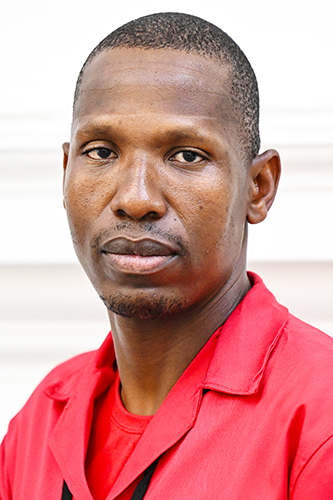
Mr Willem Aucamp, a Member of Parliament representing the Democratic Alliance in the National Assembly (NA), has called for the establishment of specialised units in the South African Police Service (SAPS) to focus on farm attacks, livestock theft and other crimes in rural areas.
He was leading a debate in a mini plenary of the NA on his proposed topic “Assessing state response and policy gaps in addressing rural safety and food security in South Africa.”
Mr Aucamp claimed that the brutality of farm attacks and the effect this has on food security has been ignored for a long time in South Africa. “Parliament was forced to face the truth when the Police and Agriculture committees produced a joint report on farm murders, which was unanimously adopted. It was agreed that these attacks are taking place. However, recognition without implementation is meaningless; words do not stop bullets, reports won’t restore lives, and food will not grow in stores,” said Mr Aucamp.
He said the country needs to do more to protect farmers, farm workers and people living in the rural farms, because when they are under threat, our food security is also under threat. He then went on to outline his party’s proposed reforms needed to secure the country’s rural communities and safeguard national food security. On the top of his list is the establishment of a specialised rural safety unit within SAPS, consisting of properly trained and resourced people to solely focus on rural crimes, farms attacks and stock theft.
The DA also proposes the need to urgently strengthen rural crime intelligence and improve data collection, intelligence networks and cooperation between police and local communities, which must include farm watches and traditional leaders.
“The unique nature of farm attacks, with the torture and brutal violence, must be officially recognised and be addressed accordingly. These are not ordinary crimes. They are targeted, premeditated and devastate families and communities. They must be declared as priority crimes,” said Mr Aucamp.
Ms Nandi Ndalane of the African National Congress said that while the ANC supports the need to improve rural safety, it must also be complemented by efficient service delivery and economic development. “In addition to the rural safety strategy, we must also implement the integrated rural development strategy to boost investment and revitalise rural economic development. Rural communities also deserve services and economic development; we must prioritise infrastructure such as electricity, water and roads,” she said.
The uMkhonto weSizwe Party, through its MP Mr Andile Mngxitama, was more concerned about the welfare of farmworkers and the emergence of genetical modified organisms, especially on large commercial farms. “The GNU government continues the apartheid agricultural relations, which are based on brutality against black people and poisoning the population with genetically modified organisms for profit maximisation. The commercial agriculture sector remains a bastion of naked racism and systemic violence against black people.
“The oppressive relations inherited from the past, continue in democratic South Africa. We must see the violence and exploitation behind the food that we eat every day, which is produced by hungry people. Despite feeding the nation, they are hungry,” said Mr Mngxitama.
He also accused large commercial farmers of poisoning the population through genetically modified crops. “It is shocking that 90% of the maize, which is a staple diet for our people, is from genetically modified crops. White farmers are busy with genocide by food for profits – little wonder why our people suffer from many chronic diseases – we are being poisoned every day and the government allowing farmers to practice this violence by poisoning the nation for profit,” he said.
Mr Sam Matiase of the Economic Freedom Fighter poured cold water on the debate topic and said it was for “spectacle purposes only and premised on the false argument that it is white commercial farmers only who produce food who are victims of farm killings”.
“Mr Aucamp speaks for the large commercial famers and does not intend to do the same for the small-scale and subsistence farmers sector, because in his world outlook they are non-existent, and more importantly insignificant because they are predominantly black and peasantry in nature,” he said.
According to Mr Matiase, one of the major threats to food security in South Africa is the slow pace of land redistribution. He believes that to defeat food insecurity, land ownership patterns and production relations need to be transformed. He suggested a targeted programme of land redistribution with transparent beneficiary selection to guard against state capture, especially from organised commercial interests that might lead land reform beneficiaries into joint ventures, which will not benefit the poor.
The EFF argued that the land redistribution programme, where the market dictates which land is available for redistribution, will not result in a meaningful impact on food security and livelihood improvement of the poor.
Inkatha Freedom Party representative Ms Busaphi Machi said her party finds the government response to food security and rural safety to be inadequate, inconsistent and disconnected from the lived realities of rural communities. “The people of rural South Africa, farmers, farmworkers, and farm dwellers, feel abandoned, and our rural areas have become soft targets for criminals.
“The state’s response remains reactive instead of preventative. For years we have called for the reintroduction of specialised rural safety units, which were disbanded in the early 2000s. The rural safety strategy exists only on paper, with no implementation plan and is fragmented, and lacks integration with other crisis departments,” said Ms Machi.
Dr Kgosi Letlape of ActionSA said: “The murders of farmers and farm workers remain a matter of international concern. However, we must not exceptionalise. We cannot make one life more important than another, all lives should be prioritised. We need a safety strategy that will focus on all of us.”
Sakhile Mokoena
11 June 2025
 Arrange a tour