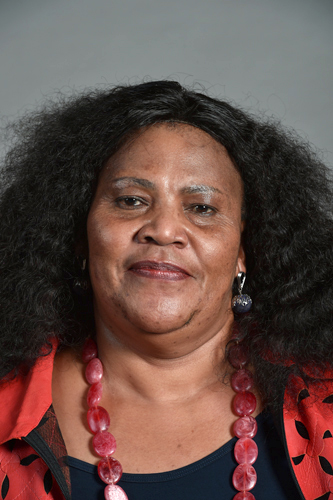



Making her statement on school safety in the National Assembly, the Minister of Basic Education, Ms Siviwe Gwarube (DA), began by saying, “This morning, I joined the Minister of Police to sign a Safe Schools Implementation Protocol between the South African Police Service (SAPS) and the Department of Basic Education”. This is a public demonstration of their shared commitment to ensure that South African children learn in a safe, protected and dignified environment, she said.
She then explained the significance of this new safety protocol at South African schools. “Our schools, which should be safe spaces for hope and learning, are too often sites of danger, trauma and violence.” She added that the recent data from SAPS paints a grave picture. In the 2023/24 financial year, 28 and 234 rapes murders occurred in primary schools and two-thirds of these involved learner-to-learner assault. In addition, over 1 100 burglaries were reported, with the loss of items ranging from teaching to kitchen equipment.
Nonetheless, these figures are a decrease from previous years, something the minister attributed to collaboration between the Basic Education department, the police, school governing bodies and the communities. “However, members, one incident is one too many, because each of these violations represents the loss of dignity, safety and freedom for the child and the erosion of trust in our education system,” she claimed.
She then turned her attention to the issues of teachers committing sexual assault against pupils and gangs fighting against one another in schools, which has outraged the nation. This was the impetus for the months of high-level engagement between her department and the SAPS to draft the interventions contained in the safety protocol.
This document will be a practical guide to bring urgent action in every district, in every province and in every school. This is because “the safety of our children is non-negotiable, and we are here to draw the line in the sand to say enough is enough. Our schools can no longer be places of violence, extortion, murder and rape,” she vowed.
However, Ms Nompumelelo Gasa (uMkhonto WeSizwe Party), held a differing view. She suggested that the Minister has no right to talk about children’s safety, when she is the very reason why children are unsafe. “Under her watch,” she said, “our schools have become war zones of hunger, violence and hopelessness.” She suggested that the Minister should make a public apology to every child that has suffered under her leadership. “Let the truth be known, a three-year-old child in Limpopo dies in a pit latrine; in the North West Province, a 15-year-old girl was stabbed in a classroom; in Gauteng, learners dodge gang bullets on their way to school. And now we must believe that the minister is concerned?”
Mr Mandla Shikwambana (EFF), shared this view of school-based violence and crime. He is of the view that these acts of violence are not born at schools, but is imported from “communities overwhelmed by crime, drugs, poverty and hopelessness”. He called upon the state to use all the resources at its disposal to ensure that schools are free from any form of violence.
Mr Siphosethu Ngcobo (IFP) blamed the inequitable psycho-social support provided to address trauma, bullying and gangsterism at schools as well as the lack of local and effective security infrastructure, especially in under-resourced and rural schools. “We reiterate that the Department of Basic Education should form partnerships with community police forums, traditional leaders and governing bodies to create a localised safety plan,” he said.
In addition to these concerns, Mr Marlon Daniels (Patriotic Alliance) added the safety of teachers, who face increasing abuse and assault from learners, which undermines their authority and wellbeing. “So, the disciplinary framework and systems must be put in place for the safety of our educators and our schools,” he suggested.
It is often said schools mirror a society, and these crime statistics indicate a society that suffers from moral degeneration, said Mr Wynand Boshoff (FF+). As much as it is necessary to support the minister’s initiatives, they are not enough, because we are dealing with an all-encompassing problem of a society that lost its direction, he said.
Ms Lerato Ngobeni (ActionSA) continued on Mr Boshoff’s trajectory, stating that the school crime statistics reflect a society abandoned by the state. At worst, she said, even the teachers who are entrusted with the responsibility of shaping young minds have turned into predators. These are not isolated incidents, they are systemic failures. “We can’t claim to be building a capable state while our kids are brutalised due to systemic failures of the state,” she said.
Mr Wayne Thring (ACDP) narrated the sad story of Joshua Peterson, who was stabbed at Durban West Ridge High School and left paralysed. “Minister, on 13 May 2025, I moved a motion without notice, calling on your intervention. But neither he nor his parents have heard from your department since his violent attack. I appeal to you, Minister, not to leave Joshua as yet another statistic of school violence in our schools,” he urged.
Meanwhile, to combat bullying in schools, Mr Tshepo Louw (ANC) recommended that anti-bullying policies be put in place, along with reporting systems and support for victims. To achieve this, “We must invest in psychological services to address the cause of aggressive behaviour and foster a culture of empathy and respect at our schools.” In addition, he suggested that peer mediation and educational programmes are also important tools. Thus, we are committed to ensure that learners receive free quality education and are free from fear or intimidation. “This is not a policy objective, but our moral imperative as legislators,” Mr Louw concluded.
Abel Mputing
25 June 2025
 Arrange a tour