



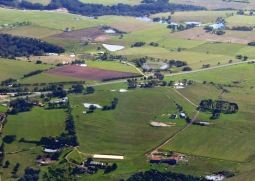
Parliamentary scrutiny highlights the challenge of protecting productive land, strengthening plant health controls and ensuring that agricultural laws translate into practical action reports Temba Gubula.
Food security begins with the soil and agricultural landscapes that sustain South Africa’s food production. Protecting these resources is both an economic and social imperative, affecting livelihoods, employment and the country’s ability to feed its people.
These issues were central to deliberations when the Portfolio Committee on Agriculture met virtually with the Department of Agriculture on 13 October 2026. The committee examined progress on regulations for the Preservation and Development of Agricultural Land Act (PDALA) and the Plant Health Act, as well as the Department’s broader legislative programme.
Protecting the Land that Feeds the Nation
PDALA is intended to address shortcomings in the Subdivision of Agricultural Land Act of 1970 and strengthen the protection and sustainable use of agricultural land. The older law contained gaps relating to government-owned land and the respective roles of provincial and local government. The new framework seeks to establish a broader, coordinated approach to land-use decisions, irrespective of ownership.
A key objective is to protect high-value agricultural land from being converted to incompatible uses. The Department reported that South Africa has approximately 21 million hectares of land under cultivation, including around 1.5 million hectares under irrigation. However, productive agricultural land continues to face pressure from housing developments, infrastructure projects and other competing land-use demands.
PDALA proposes a structured process involving all three spheres of government, provincial structures to consider applications, alignment with municipal planning processes, and the assessment of proposed land-use changes against agricultural potential and agro-ecosystem principles. Public consultation on the draft regulations, published in March 2026, has been completed and stakeholder submissions are currently being consolidated. The Department indicated that it remains on track to finalise the regulations and accompanying guidelines by March 2027.
A Law Is Only as Effective as Its Implementation
Members questioned whether provincial departments and municipalities would have the expertise and resources necessary to implement the framework effectively. Concerns were also raised about coordination across spatial planning, environmental legislation, mining regulation and other systems that influence land-use decisions.
The Department acknowledged that some provinces may initially face capacity constraints but said national and provincial teams are undertaking training initiatives and developing mechanisms to assess applications and coordinate decision-making.
The proposed National Agro-Eco Information System is intended to provide information on agricultural potential and land classification, helping users identify suitable land uses and protected areas. Procurement has not yet commenced. The Department estimated that the system would cost approximately R5 million and noted that funding would first need to be secured. Without adequate resources, technical skills and reliable data, implementation may be uneven.
Members also stressed the importance of involving traditional leaders and rural communities in decisions affecting land use. They highlighted historical inequalities and the interests of communities whose livelihoods and cultural practices are closely tied to the land. The Department responded that traditional leadership structures had participated in earlier consultations and would continue to be engaged through future sector planning processes.
Protecting Plants, Protecting Trade
The committee also considered regulations for the Plant Health Act, enacted in 2024 to replace the Agricultural Pests Act of 1983. The legislation addresses pests and diseases that enter through trade or spread between agricultural areas, while strengthening measures to prevent, detect and contain regulated pests.
Plant health is critical to both domestic agricultural production and export markets. An invasive pest without natural controls can cause significant damage, while weak phytosanitary measures can place export market access at risk. The Department reported that draft regulations were submitted to the Minister in September 2026 for consideration and approval. It also outlined ongoing training and surveillance activities, while emphasising the need for coordination among national and provincial authorities, producers and local communities.
Modernising Agricultural Legislation
The Department’s legislative programme for the Seventh Administration includes the anticipated Perishable Products Export Control Amendment Bill in 2026. Proposed legislation relating to animal welfare, veterinary professions, animal feeds, stock remedies, agricultural marketing, fertilisers and pesticides is planned for 2027. Further amendments concerning agricultural produce agents and agricultural research are envisaged for 2028.
Members questioned the pace of legislative development and sought clarity on the status of the Animal Diseases Act of 1984, the Animal Health Act of 2002, and regulatory controls governing fertilisers, farm feeds and agricultural remedies. The Department indicated that further policy decisions are required regarding the animal health legislation. It also confirmed that a working draft of the Animal Welfare Bill has been prepared and is entering the legislative development process following technical engagement with the University of Pretoria.
From Legislation to Lasting Impact
The deliberations underscored the interconnected nature of agricultural legislation, linking land protection, plant health, trade, institutional capacity and community participation. While progress is being made on the regulatory framework, important work remains, including the consolidation of public comments, the mobilisation of implementation resources and the resolution of outstanding legislative matters. The Chairperson requested that outstanding responses and supporting documents be submitted for circulation to members.
Ultimately, success will be measured not only by regulations finalised or Bills introduced, but by the extent to which these measures protect agricultural resources and support sustainable food production. Safeguarding the land beneath South Africa’s food system is therefore more than a regulatory responsibility; it is an investment in food security, economic resilience and the wellbeing of future generations.
 Arrange a tour