



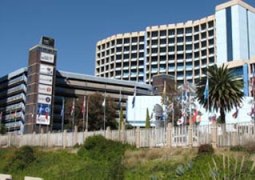
The South African Broadcasting Corporation (SABC) last week again raised concerns about the impact that the absence of additional funding could have on the scale and scope of its planned coverage of the upcoming local government elections.
The Group CEO, Ms Nomsa Chabeli, told the Select Committee on Economic Development and Trade that the public broadcaster remains committed to providing credible, impartial and comprehensive election coverage, while planning within its available resources pending a decision on its funding request.
Ms Chabeli said it was important for the SABC to provide comprehensive election coverage, as it remains mandated to provide a plurality of voices and ensure South Africans are informed and able to participate fully in democratic processes. She explained that while the broadcaster is preparing for the elections within its affordability, it retains the capability to expand its deployment should additional funding become available.
“When it comes to the national operations centre, but in terms of the complexity of the local government election, it is that we have to offer that wall-to-wall coverage in a far more exhaustive manner,” Ms Chabeli said. “We are still required to provide the platforms for the political parties to be able to speak to South African voters, and get their messages across. Unfortunately, we have not received the funding from the National Treasury, and therefore it is required that we plan in the absence of funding.”
She said the public broadcaster is now planning coverage within its affordability and maintains it can deploy. “The ability to afford the deployment is still there should the funding become available, but sitting here nearly three weeks before the start, we realise that the window is fast closing,” Ms Chabeli said. “But for us it is important to reinforce commitment to ensuring that we provide credible, impartial access to election coverage which is supported by these realistic plans.”
As the SABC presented its annual plan to the committee, Members heard that the public broadcaster achieved an unqualified audit outcome for the first time in 14 years and that it will soon release its financial results to the public. The committee also heard that performance has improved significantly against the targets set out in the corporate plan.
The committee had earlier expressed concern over Sentech's late submission of presentations. The Chairperson of the committee, Ms Sonja Boshoff, said she did not understand the apparent disregard for committee processes and sought an explanation.
“[The late submission of presentations] hampers the Members’ ability to conduct effective oversight of entities,” she said.
Members also sought clarity on several issues, including TV licence revenue collection, the migration from analogue to digital broadcasting and the reasons for delays in the process, as well as the possible classification of the SABC as a Public Benefit Organisation.
One Member, Mr Nico Pienaar, said the television licence collection system was not working and that an alternative funding model needed to be considered.
“Have you considered reclassifying the SABC as a public benefit organisation?” he asked.
Another Member, Mr Bones Modise, said Parliament's objective should be to ensure the sustainability of the public broadcaster.
“The legislation is outdated. What are we doing to save the SABC? That interaction is very important; we need to save the SABC,” he said.
He proposed that the committee engage further with the SABC early next year to identify areas where intervention may be required.
The committee will later receive a briefing from Sentech.
Sibongile Maputi
15 October 2026
 Arrange a tour
