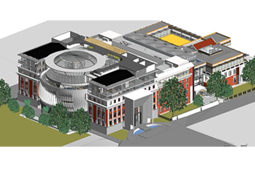
The Joint Standing Committee on the Financial Management of Parliament (JSCFMP) on 14 August 2026 welcomed the Speaker of the National Assembly Ms Thoko Didiza’s undertaking to meet with the current and former Ministers of Public Works and Infrastructure (DPWI), together with relevant officials in the National Treasury and Parliament, to take stock of the decisions taken on Parliament’s rebuilding project.
The meeting would include those currently in the relevant portfolios and those who have held them at various times.
The JSCFMP met to follow up on its meeting with the executive authority of Parliament and the parliamentary administration, as well as the Development Bank of Southern Africa, on the Rebuilding Project after a site visit by Members the week before.
In response to questions from Members, the Speaker said the meeting would ascertain the roles played by all relevant stakeholders. It must also provide details on the custodianship of the parliamentary precinct, funding and the authority under which Parliament was driving the project. “We need to know what happened, what the roles of Public Works, Parliament and National Treasury were, and what decisions were made at every stage of the project,” said the Speaker. She said the proposed meeting would enable the executive authority to report back to the committee on the discussions held at all levels, including the financial implications and the processes followed for the project.
The committee agreed that the extensive public funds allocated to the rebuilding project required careful scrutiny, but Members also recognised the need to conclude the project.
Acting Co-Chairperson of the committee, Mr Cameron Dugmore, said the committee would make provision at its next meeting on 28 August to receive the feedback. “By then the Speaker and the Chairperson will have had an opportunity to interact with the current and former Cabinet ministers in the relevant portfolios mentioned during today’s meeting. We will also consider the report on the genesis of the rebuilding project that was circulated to Members this morning. In due course, the agenda for our next meeting will be finalised after consultations with the Co-Chairpersons.”
Committee members were also briefed on the performance of Parliament for the first quarter of the 2026/27 financial year. The report showed that Parliament achieved 12 out of the 17 (70.59%) annual performance plan targets for the period. Among the targets that were not reached were those relating to monitoring and tracking of resolutions, the Integrated Security Strategy and monitoring of Sectoral Parliament resolutions.
Members expressed concern in particular about the poor response by the executive to parliamentary questions. The report showed that 53.8% of written questions in the National Assembly received responses, while 70.4% of written questions in the National Council of Provinces received responses.
Members noted that the failure by the executive to respond promptly to questions posed by Members of Parliament (MPs) undermined Parliament’s role of overseeing state affairs. They said constituents could not get the information they sought through MPs and called for urgent measures to ensure that the executive answered questions. Members warned that quarterly performance reporting should not become a compliance exercise where this matter was raised ad nauseam without improving the responsiveness of the executive.
They said Parliament’s own performance management systems need to strengthen its ability to hold the executive to account, enable MPs to respond to the needs of the people it represented, and improve oversight, including through sanctions. The parliamentary administration reported that the Speaker had referred the matter to the Rules Committee to consider strengthening the consequences and procedures when members of the executive fail to respond to parliamentary questions.
Alicestine October
17 August 2026
 Arrange a tour