



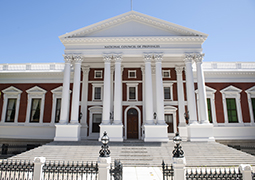
The influx of cheap imported textile and clothing products and the illegal entry of fake products are reportedly some of the contributing factors to the challenges facing South Africa’s textile and clothing industry. This emerged during a recent debate in the National Council of Provinces (NCOP) on the topic: Revitalising of the clothing and textiles industries to unlock the economic potential of the township and rural economies to create jobs, reduce inequality and empower local communities.
The mover of the topic, Mr Mpho Modise, an African National Congress delegate from the North West province, opened the debate by reminding the House about the history of the textile and clothing industry and its contribution to job creation and economic empowerment for township and rural communities. Mr Modise argued that the decline of the industry started after 1994 when the country signed international trade agreements and opened its industries for global competition.
“Immediately after 1994, South Africa was put under immense pressure to conform and align with international economic trade policies consciously managed by the International Monetary Fund, the World Bank and the World Trade Organisation. Some of these policies include trade liberalisation or rather the lifting of certain trade restrictions, which brought increased integration of the South African economy with the global economy but created new vulnerabilities by opening the South African economy to external factors with potential negative inclusive industrial development consequences,” Mr Modise explained.
Mr Modise believes that despite some successes, these international trade treaties have not delivered the desired outcome for South Africa. Instead, they have created multiple challenges for the clothing and textile industry such as the influx of cheap clothing and textile which started increasing after 1994 and intensified in the 2000s, mainly from China, Eswatini and Madagascar.
He is however hopeful that the industry could be revitalised, as the industrialisation of the textile and clothing industry features prominently on the government’s National Development Plan agenda. “We also support the textile, clothing, footwear and leather growth programme, which was implemented by the ANC government and are recently being accelerated,” said Mr Modise.
Participating in the debate, the Minister of Small Business Development, Ms Stella Ndabeni-Abrahams, agreed that the influx of cheap imports and fake products were among major challenges facing the industry. She told members of the NCOP about some of the government’s planned initiatives to revitalise the sector to unlock its potential.
“We are busy with sets of strategic actions that we all need to support if we are serious about transforming the sector and growing the economy and create jobs. Working with the Department of Trade, Industry and Competition and the South African Revenue Service, we must cut down on cheap imports, through tariffs, including on e-commerce platforms; and clampdown on fake illicit imports entering the country,” said the Minister.
According to the Minister, limiting these illicit cheap imports is critical to open the local market for small enterprises, particularly those from townships and rural areas.
The government is also working to strengthen the capacity of the state through coordination on the enforcement of regulations and bylaws to crack down on illicit business. “Working together with organisations against counterfeit goods, we will soon announce a partnership with a campaign to fight the proliferation of counterfeit goods in our country,” she said.
NCOP Permanent Delegate from Mpumalanga Ms Sonja Boshoff of the Democratic Alliance, who is also the Chairperson of Select Committee on Economic Development and Trade, accused the ANC of not prioritising the industry and failing to realise its potential to transform rural and township communities into thriving centres of economic activity.
“There is tremendous opportunity in these communities to create jobs, reduce inequality and empower individuals, Ms Boshoff said. “One of the most promising ways to achieve this is by revitalising our clothing and textile industries, which have the power to transform these communities into thriving centres of economic activity.
“However, it seems the ANC approach to the clothing and textile industry is a bit like an old jacket left forgotten at the back of the closet out of sight out of mind. While our communities are calling for opportunities and investment, the government seems content with mothballing the potential of this industry,” Ms Boshoff said.
“The creation of local business homes and incubation, and development programmes will greatly assist in reducing transportation costs and making supply chain shorter and allow producers to serve consumers directly, making products more affordable and accessible,” she continued.
“For clothing and textile industries to compete in a globalised world they must be supported by a skilled workforce – investing in training programs that equip young people and women in rural areas and townships, with the necessary skills in garment making, textile design and entrepreneurship will go a long way in growing this industry,” Ms Boshoff said.
Ms Mathapelo Siwisa, an Economic Freedom Fighters delegate from the Northern Cape, was concerned that despite many positive characteristics of the sector, it has performed poorly in South Africa and has faced numerous challenges.
“One of the challenges is growing global competition with cheap imports. The failure to have protective industrial policy has led to the killing of the local industry,” said Ms Siwisa.
She alleged that the decline in manufacturing and in South Africa’s textile and clothing industry, is because the government is focusing more on imports than exports. “Government needs to relook at its imports policies and focus on the revival of the closed-down textile and clothing factories. We need more investment on local manufacturing and minimise imports – focus on industrialisation,” the EFF member urged.
Sakhile Mokoena
7 November 2024
 Arrange a tour