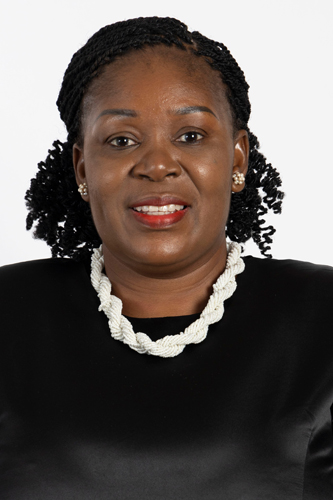



Delivering a thought-provoking lecture at Parliament’s colloquium marking 30 years of South Africa’s constitutional democracy, UNISA Principal and Vice-Chancellor Prof Puleng LenkaBula challenged South Africans to confront the widening gap between the ideals of the Constitution and the lived realities of inequality, gender-based violence and economic exclusion. Drawing on former president Thabo Mbeki’s iconic “I am an African” speech, she reflected on the Constitution’s transformative vision while questioning whether it has truly delivered justice, dignity and liberation for the majority of citizens.
The speech “made a sacrosanct invitation to Africa to believe and to accept the integrity of their ontology and to respect who they are. This speech was not merely about poetics, but about belonging and it was, on the whole, a constitutional act,” Prof LenkaBula began.
The speech was delivered to mark the adoption of South Africa’s new Constitution, but it was no mere performative act, Prof LenkaBula said. Rather, it was “an ethical declaration that wove together the wounded and the triumphant, the threads of our identities and our past.” The speech sought to undo the apartheid fragmentation imposed on those still enduring the legacy of colonial and apartheid oppression, irrespective of their colour, culture or creed.
“His oration nudged us to embrace each other of the same wound: Africans in diaspora and those brought to the African shores through colonial rule to serve the geo-political interest of the colonialists.”
If anything, Prof LenkaBula suggested, the reconciliatory tone of the new Constitution was an undertaking to make these previously disenfranchised souls feel human again. It formed the basis upon which they could: “co-construct together the future of the new South Africa of the multiple, the wounded, but yet indivisible”. The Constitution gave a legal form to that imaginative and invitational act.
Nonetheless, Prof LenkaBula cautioned, South Africans should not shy away from asking hard questions about its efficacy. “We must ask: has the non-racial, non-sexist democratic and prosperous South Africa promised by the Constitution been fulfilled? We should ask: has the gap between the constitutional text and the concrete and lived realities on the ground become a chasm upon which many struggles are to cross?”
A definitive answer to this question will determine how South Africans think about the Constitution. Either they will think about it merely as a metaphor for a deferred dream, or they will consider it an instrument for distributive justice. “When we remember the promise and founding principles of our Constitution, what do we see? Do we see a South African promise in the making or a dream deferred?”
Prof LenkaBula went on, saying that what is needed is to speak truth to power to sow the seeds of a renewal that is just.
Continuing her critique of the new Constitution, she pondered, 30 years on, what to make of South Africa’s constitutionalism in relation to the socio-economic realities of today. “Has it been a self-serving and self-centred document, or has it also spread its legal tentacles to deal with economic extraction, debt, geopolitical trepidation or greed facing the nation?”
Prof LenkaBula then turned her attention to the Constitution’s Bill of Rights. On one hand, she suggested, the Bill of Rights has led to landmark legal jurisprudence. For example, the decriminalisation of same-sex love, the legal right to housing, the abolition of the death penalty, and the recognition of customary law and women as agents of their own lives.
She further hailed the judiciary and the chapter nine institutions “for upholding the Bill of Rights in instances where they would have been trampled by the executive power”.
On the other hand, however, Prof LenkaBula pointed to what she described as the Constitution’s unreconciled paradox: it remains a gendered document. She situated this claim on the work of feminist scholars who say that constitutions are “documents that often enshrine formal equality while failing to dismantle patriarchal power in households, institutions, in the economy and the state”.
As a result, despite the Constitution’s many successes in supporting women’s rights in jurisprudence, “it presides over a country that has the highest rate of GBV and femicide in the world, a social ill that remains an underfunded area and this requires a solution,” Prof LenkaBula explained.
Turning her attention to the ills of constitutionalism on the continent, she referred to criticisms that constitutionalism in Africa has become a liberalism that protects property relations while leaving structural violence intact. She gave the example of South Africa’s Gini coefficient score as statistical support to illustrate this, saying that in South Africa, economic inequality mirrors the racial economic inequalities of our apartheid past. This Constitution has failed to undo this.
“Sadly, the economy remains racial stratified. The top 10% of the population that is overwhelmingly white owns 80% of financial assets, according to a StatsSA report of 2025. This needs to be remedied,” she said.
Furthermore, the charm of the South Africa’s constitutionalism continues to be overshadowed by the enduring impediments of its colonial and apartheid pasts. “Despite its excellence, it could not insulate the country from the structural adjustment programme, the debt traps and asymmetric regimes of the law of the world, against the rise of multipolarity and climate change that demands more than just a constitutional fidelity, but a fundamental rethinking of our economic sovereignty.”
Prof LenkaBula also warned that South Africans should guard against turning the Constitution into “a fortress for the economic elite while ordinary citizens are excluded from economic dignity”. If this occurs, “we will be unable to sustain its legitimacy”.
Throwing down a gauntlet to other academics, the professor concluded by declaring that UNISA will not be a neutral observer, but rather an active participant in South Africa’s constitutionalism. UNISA aims to ensure that the Constitution goes beyond an ideal, to become something definitive that resonates with the aspirations of the founding principles of our democracy.
“We will remain an active participant, a critique and a conscience of our society through research and scholarship to ensure that Africa’s civilisation and its ideas are enacted. Or have we, as academics and scholars, remained indifferent to the contradictions and challenges of our society?”
Abel Mputing
27 May 2026
 Arrange a tour