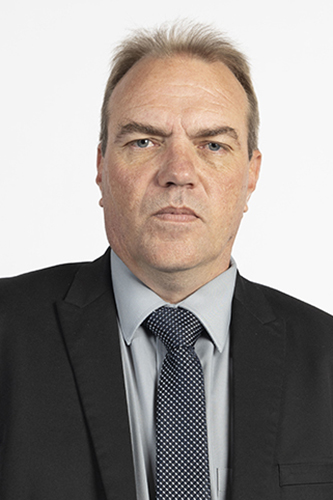



Speaking during the Parliamentary Budget Office’s (PBO) Multidimensional Poverty Peer Network Roundtable, Dr Pali Lehohla, the former Statistician-General of South Africa, supported the use of macro and micro instruments to detect the determinant factors at the root of poverty. However, he cautioned that without political will to implement and mainstream them in policy formulation, law-making and oversight processes, poverty will continue to haunt its citizens.
The youth unemployment crisis
He went further to say that the government had missed an opportunity to make policy and legislate against the effects and impact of population growth on the youth, which has prevented the youth from entering the world of gainful employment. Sadly, it is black and coloured youth who constitute 90% those young people who are at the receiving end of this neglect, which has manifested itself in our current youth unemployment crisis, he noted.
Dr Lehohla also noted that education could overturn this trajectory of deprivation among the youth, but this has not been prioritised by politicians. “Often politicians don’t use education as their campaign ticket, although it’s central to the eradication of multidimensional poverty. We currently have a problem of youth unemployment, and education is central to it, but yet government doesn’t prioritise education as a means to address this issue,” he said.
He added: “In 1994, education was free but the throughput of the 90% of South Africa’s population which constitutes black and coloured youth who passed matric and completed their degree dropped considerably compared to their white counterparts, which doubled because of their progressively high education uptake.”
English is also a factor to these racially skewed education statistics, he said, as the non-English speaking youth do not finish their degrees due to their lack of competency in English. As such, English continues to be the determinant factor for the success or failure of the non-English speaking youth in attaining quality education that could enable them to be employable and escape deprivation, he claimed.
However, Dr Lehohla was hopeful that the new method of modelling multidimensional poverty devised by the Applied Development Research Solutions (ADRS) will contribute to new and improved policy frameworks and pieces of legislation that can address the multidimensional nature of poverty and its effects.
Poverty and human rights
This new optimism is critical because, as the Regional Advisor of the Office of the United Nations Commissioner for Human Rights in Southern Africa, Ms Chanel van de Burg, observed in her presentation to the roundtable discussion, poverty is a human rights violation. This is because it violates a person’s innate right to food. This is one of the inherent rights foregrounded in the South African constitution and is also at the heart of the UN’s Social Development Goals, she added. In other words, poverty is a breach of the rule of law and South African sovereignty.
Ms van de Berg also observed that poverty continues to be feminised, because it is female-headed households that continue to be the face of poverty in South Africa and on the continent. Poverty has also been exacerbated by racially skewed colonial and apartheid land-ownership disparities.
She also called for South Africa’s economic model to be interrogated. “Is it meant to enable the corporate to flourish or to curb poverty?” she enquired. This is a critical question, she suggested, because statistically South Africa is the most economically unequal society in the world. “Is its economic model not a contributing factor to that?” she asked rhetorically.
Ms Sara Hamouda, representing the African Peer Review Mechanism (APRM), explained how the Multidimensional Poverty Index can be aligned to the African Union (AU) Agenda 2063. She singled out good governance: the rule of law, regulatory quality, political stability and the absence of violent conflicts (which is one of the pillars of AU Agenda 2063) as prerequisites for poverty eradication in Africa. She said this could lead to the entrenchment of democracy, good political and economic governance and management, and increased social-economic development. This in turn will lead to the development of states that are resilient to the shocks and disasters that often lead to the entrenchment of poverty in Africa.
Sadly, however, the UN’s first 10-year evaluation of good governance in members states has shown that not much has been achieved in this regard, Ms Hamouda said. As a result, the AU and the APRM have collaborated to set up mechanisms to foster, monitor and evaluate good governance in members states as a means to reduce the effects of poverty on the continent.
The Director of PBO, Dr Dyantyi, emphasised that the PBO will, in due course, produce a preliminary report on the roundtable discussions, which will aid Parliament’s oversight model on the multidimensional aspects of poverty. He commended the participants for providing deep insight to the subject matter, saying that the best practices and models shared will enable the PBO to advise Parliament more effectively on budgeting, appropriation, policy positions and legislation to eradicate the effects and impact of multidimensional poverty in South Africa.
Abel Mputing
24 October 2024
 Arrange a tour