


The Gauteng Provincial Legislature (GPL), working alongside the South African Parliament, opened the week-long summit at Emperors Palace in Kempton Park on Youth Day, 16 June 2026, drawing presiding officers and parliamentary delegations from across the continent into a single room to confront a shared question: How does Africa build political stability strong enough to carry sustainable development?
The choice of date was deliberate as 16 June marks the anniversary of the 1976 Soweto uprising, when young South Africans rose against apartheid-era oppression at immense personal cost. Organisers wove that legacy directly into the conference programme, and visiting delegates travelled to the Hector Pieterson Memorial in Soweto to pay tribute before the formal proceedings began – a gesture linking the continent's parliamentary future to the sacrifices that shaped its democratic present.
A Sub-National First
CSPOC has traditionally been the preserve of national legislatures. The GPL’s role as co-host therefore represents a notable departure, signalling that provincial and other sub-national governments are increasingly seen as legitimate partners in continental governance conversations, not merely administrative tiers beneath them.
Delegations attending included presiding officers from Botswana, Cameroon, Eswatini, Ghana, Lesotho, Malawi, Mozambique, Namibia, Nigeria, Uganda and South Africa itself, among others – with the gathering attracting about 300 parliamentary representatives overall.
The conference is held under the theme, “Proactive Parliaments and Sustainable Development: An Imperative for Political Stability in Africa,” a framing intended to push delegates beyond reactive lawmaking and toward governance that anticipates social and economic pressures before they become crises.
Mazibuko's Case for Gauteng, and for Cooperation
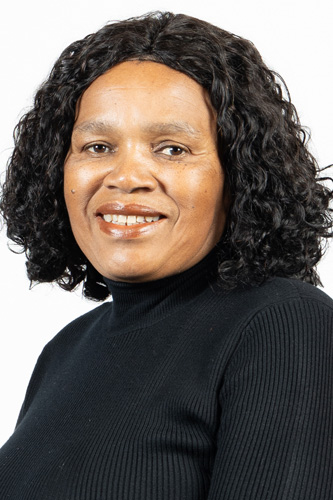
Delivering the opening address, acting Gauteng Premier Faith Mazibuko, used the platform to position her province as both an economic engine and a diplomatic bridge. Although Gauteng is South Africa’s smallest province by land area, she noted that it was home to more than 16 million people and generates over a third of the national gross domestic product, making it disproportionately influential relative to its size.
“Gauteng may be the smallest province geographically in South Africa, but it is undoubtedly the economic heart of our country and one of the most dynamic regions on the African continent,” Ms Mazibuko told delegates.
She described the province as a hub for finance, logistics, and multinational business, hosting the headquarters of major companies and serving as a transport and communications gateway linking South Africa to the wider continent. This is why Gauteng is investing in becoming what she called a “global city region” – one that is economically competitive, technologically advanced and environmentally sustainable.
Ms Mazibuko tied this vision to the African Continental Free Trade Area (AfCFTA), arguing that its implementation offered a genuine opportunity to deepen intra-African trade, open new markets, and accelerate industrialisation across the continent.
She framed Gauteng’s own provincial priorities – job creation, infrastructure upgrades, stronger public services, digital transformation and improved community safety – as inseparable from this broader continental agenda, with particular emphasis on extending economic opportunity to young people, women and small entrepreneurs who have historically been locked out of the mainstream economy.
The acting Premier’s central appeal, repeated in various forms throughout her address, was a call for solidarity over rivalry. “The continent will rise not through competition amongst ourselves, but through cooperation, partnerships and shared growth,” she said, adding that South African businesses operating elsewhere on the continent had already demonstrated the value of this approach through skills transfer, job creation, and technological exchange in partner countries.
Why It Matters
Strengthening parliamentary institutions is not an abstract exercise. Across much of Africa, public trust in elected parliament and legislatures has been strained by instability, weak service delivery and, in some regions, the erosion of democratic norms altogether. Forums like CSPOC give presiding officers – the individuals who set the rules and tone for how their own legislatures function – a rare chance to compare notes and share best practices directly, rather than through diplomatic intermediaries.
Ms Mazibuko’s emphasis on youth and inclusion also speaks to a demographic reality reshaping the continent: Africa has the youngest population of any region in the world, and governments that fail to channel that demographic energy into employment and civic participation risk the kind of instability the conference’s own theme warns against.
Over the remaining days of the conference, delegates are expected to move from opening rhetoric into structured plenary sessions, exchanging policy approaches on legislative oversight, economic integration and governance reform. Organisers say the goal is not simply dialogue but practical outcomes – partnerships and commitments delegates can carry back to their own parliaments once the conference concludes on 19 June 2026.
Thato Phala, Ngazibini Siyephu, Shiluva Mafumo, Nokulinda Makhanya and Nzondelelo Mazule
17 June 2026
 Arrange a tour