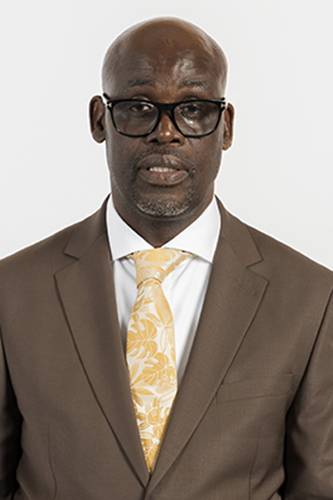



Tabling the Standing Committee on Finance’s report on the 2026 Fiscal Policy Framework and Revenue Proposals, the committee Chairperson, Mr Joseph Maswanganyi, said, the 2026 Fiscal Policy Framework represents a historic turning point for the nation’s resilient economy.
He further noted that the economic outlook has improved, with public finances reaching key milestones and the debt-to-GDP ratio beginning to stabilise, thereby easing debt-service costs as a share of revenue. Inflation has also declined, contributing to improved household affordability and lower interest rates. Collectively, these developments have strengthened South Africa’s credit rating outlook and overall economic trajectory.
Economic interventions arising out of Operation Vulindlela 2 have placed the government in a position where it is now poised to address municipal inefficiencies and dysfunctions. Operation Vulindlela has also contributed positively to the electricity and logistic sectors. In addition, the Financial Action Task Force has removed South Africa from the grey list.
Mr David van Rooyen of the MK Party said his party rejects the 2026 Fiscal Framework and Revenue Proposals in their current form as MKP believes they are not adequate to meet the country’s development targets. His party called for them to be amended to ensure that the costs incurred today are not deferred to future generations.
He also noted that the country’s debt since 2018 has ballooned from R3.3 trillion to a projected R12 trillion in this financial year. And the current framework says nothing about this borrowing or the negative impact corruption has on South Africa’s economic outlook. He called on the Standing and Select Committees on Finance to exercise robust oversight to ensure that the budget translates into tangible outcomes.
Ms Wendy Alexander of the Democratic Alliance, also participating in the debate, noted the real improvements in South Africa’s financial outlook in terms of credit rating upgrades, de-listing from the grey list, reduced inflation and stable national debt, thanks to the steady hand of National Treasury.
However, Ms Alexander also cautioned that compared to other countries in sub-Saharan Africa, with a growth rate of 4.6% and a global rate of 3.3%, South Africa’s is languishing at 1.6%. “In this regard, we have been outpaced by countries that have fewer resources, skills and smaller economies than ours,” she emphasised.
Ms Omphile Maotwe of the Economic Freedom Fighters said the 2026 budget will not assist the country to create jobs, eradicate pit toilets at schools or deliver water to people. To support this budget is to support “an instruction from IMF”, which advocates for joblessness, high interest rates and an austerity budget, she said.
Mr Nhlanhla Hadebe of the Inkatha Freedom Party said: “We recognise the environment within which this Fiscal Framework has been crafted, and we recognise the need for it to balance between fiscal consolidation and the need to protect vulnerable households. But the current policy leans on expenditure restraints without sufficient interventions to stimulate economic activity.” He added that fiscal policy should be used as a transformative tool, not as an instrument to balance the books.
Mr Ashley Sauls of the Patriotic Alliance said the 2026 Fiscal Policy Framework is not merely a collection of numbers, it’s a blueprint of a nation that chose stability over chaos. “We support this framework because it signals a turning point on how we manage our collective purse. And for the first time in 16 years, we have seen a sovereign credit rating upgrade. A clear sign that the world is beginning to believe in South Africa again. This is a reason for South Africans to feel hopeful again.”
Echoing these sentiments, Mr Wouter Wessels of the Freedom Front Plus attributed the economic resurgence to structural reforms, which could be the basis upon which to build a better future. However, he worried that the Middle East conflict would upset these optimistic projections. His party believes that inflation will go above the projected 4.3% because fuel and fertiliser prices will go up.
Mr Alan Beesley of the Action SA said: “We have made a positive contribution to this current fiscal policy because we called for the scrapping of the proposed R20 billion tax increases. If we didn’t intervene, this would have deepened the daily hardship of already-overburdened South Africa households. And we are the ones who called for the funding of SARS, because if we are serious about economic sustainability that must be addressed urgently.”
Abel Mputing
26 March 2026
 Arrange a tour