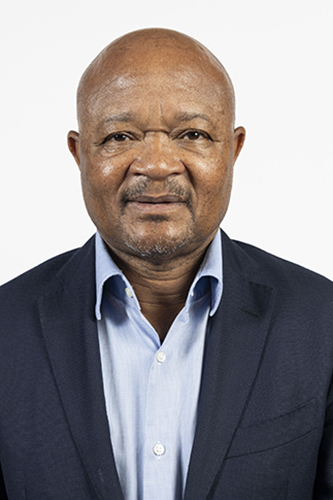



Delivering his budget speech in the National Assembly yesterday, Minister Godongwana attributed South Africa’s macroeconomic stability to fiscal management that prioritises socioeconomic obligations.
The government’s fiscal strategy includes four key features:
- Supporting economic growth by accelerating public investment
- Improving the efficiency of public spending
- Improving the composition of spending by containing the public-service wage bill, while increasing capital investment
- Entrenching sustainable public finances with a principles-led fiscal anchor
The government is reaping the fruits of this strategy. For example, the consolidated budget deficit has narrowed to 4.5 per cent of GDP for 2025/26, an improvement from 4.8 per cent in the 2025 Budget. Meanwhile, the deficit falls to 4 per cent in 2026/27 and 3.1 per cent the year after.
In addition, gross debt stabilised as a share of GDP in 2025/26, at 78.9 per cent. In 2026/27, it will fall further to 77.3 per cent of GDP, and by 2028/29 it will reach 76.5 per cent. The slightly higher debt peak this year reflects weaker nominal GDP growth and South Africa’s decision to take advantage of strong investor demand in domestic and global markets by increasing issuance in 2025/26.
The main budget primary surplus for 2025/26 is 0.9 per cent of GDP. In the next financial year, it expands to 1.6 per cent, and then to 1.9 per cent in 2027/28. By 2028/29, the government sees it reaching 2.3 per cent.
To sustain fiscal discipline, Mr Godongwana said the government intends to continue the engagements on fiscal anchors. “We aim to introduce a proposal for a principle-based fiscal anchor in the Medium-Term Budget Policy Statement after thorough consultation in Cabinet, Parliament and with the public.” Just as inflation targeting provided clarity and credibility to monetary policy, the fiscal anchor aims to entrench fiscal credibility.
The structural reforms the government is implementing to lift growth alongside this fiscal strategy reflect an understanding that the state should adjust to the needs of the national economy in a flexible way.
On energy reforms, the government is stabilising electricity supply and building a competitive, reliable energy market. Regulatory reforms in this sector have unlocked significant private investment, accelerating generation capacity and driving the transition towards cleaner, renewable power.
In logistics, the government is dismantling bottlenecks in rail and ports that have throttled exports and raised the cost of doing business. “Our intention is to bolster public–private investment in rail operations while retaining state ownership of rail infrastructure,” Mr Godonwana explained.
 Arrange a tour