


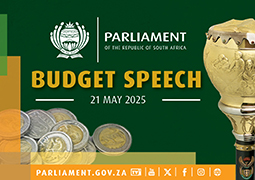
The Minister of Finance, Mr Enoch Godongwana, has announced billions of rand allocations for the employment of medical doctors and educators, as well as the expansion of the early childhood development (ECD) programme.
In his budget speech in a sitting of the National Assembly at the Cape Town International Convention Centre, the Minister said the health budget will be increased by R20.8 billion over three years to employ 800 post-community service doctors and essential goods and services and reduction of accruals. He added that government hopes this increase will also assist the health sector in addressing personnel budget pressures.
“The budget maintains the expenditure trajectory presented in the March 12 budget. Addressing the persistent spending pressures to restore critical frontline services and invest in infrastructure is critical for improving access to basic services and lifting economic prospects,” he said.
On education, the Minister said the provincial education sector baseline over the 2025 Medium-Term Economic Framework is R1.04 trillion, and R9.5 billion will be added over the medium term to keep teachers in classrooms and hire more staff.
“An additional R10 billion has been added to the baseline, as announced during the March 12 budget, to expand access to early education is kept unchanged. This will increase the ECD subsidy from R17 per child per day to R24. The extra funding will also support increased access to ECD for 700 000 more children, up to the age of five years,” said Minister Godongwana.
The Minister also announced government plans to reconfigure funding for the troop deployment to the Democratic Republic of the Congo following the announcement of South Africa's phased withdrawal from the East African country. “In this regard, the R5 billion we had proposed to allocate to the Department of Defence for its participation in the SADC mission in the DRC is reduced, but the allocation for 2025/26 has been increased from R1.8 billion to R3 billion and this will cover the immediate costs of an orderly and safe withdrawal of our troops and mission equipment,” he said.
The old age grant will be increased by R120 to R2,310 (from April 2025) and is set to increase by an additional R10 to R2,320 in October, while the COVID-19 social relief of distress will be extended to the end of March 2026. “Government is actively exploring various options to better integrate this grant with employment opportunities. This includes considering a job-seeker allowance and other measures, as part of the review of Active Labour Market Programmes,” said the Minister.
The goal of government, the Minister explained, is not only to provide immediate relief but to also to create pathways to employment, empowering the citizens to build better futures for themselves and their families.
To support the country’s preparation for the 2026 local government elections, the Minister allocated an amount of R1.4 billion to support the preparations for the upcoming local elections. R885 million of the allocation is for the Independent Electoral Commission and R550 million for the South African Police Service and the South African National Defence Force to maintain public order. “This investment contributes to upholding the democratic processes and ensuring that every South African can exercise their right to vote in a safe and secure environment,” said the Minister.
Mr Godongwana told the National Assembly that despite the additional allocations made in the budget there are other long-standing spending pressures that persist but cannot be funded within the current envelope. “This is the nature of policy trade-offs. Prioritising what we can do now and what we must postpone and spend on later when our revenue allows,” he said.
The spending pressures that may require funding later this year, include:
- The withdrawal of the President's Emergency Plan for AIDS Relief (PEPFAR) funding, particularly through USAID.
- Infrastructure projects in the Budget Facility for Infrastructure (BFI) and the Passenger Rail Agency of South Africa (PRASA) rolling stock fleet renewal programme.
- Accommodating population changes that impact on the provincial equitable share allocations.
- Strengthening capabilities in the Office of the Chief Justice and Statistics South Africa.
- Political party funding and infrastructure provision for royal houses; and
- The National Social Dialogue.
The division of nationally raised revenue will see R2.4 trillion of total non-interest spending allocated to provinces over the medium term, while municipalities will receive R552.7 billion over the same period. “The allocations will fund increases in the cost of bulk water and electricity costs provided for free to needy households,” said the Minister.
In 2025/26, 83 per cent of the local government equitable share provides a free basic services package of R610 per month to 11.2 million poor households.
Sakhile Mokoena
21 May 2025
 Arrange a tour