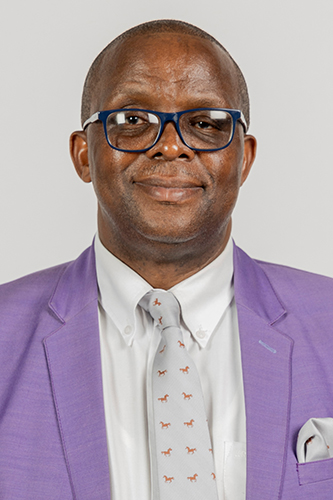



Debating the significant increase in electricity costs after the National Electricity Regulator of South Africa (NERSA) granted Eskom’s application to retrospectively raise charges, the sponsor of the debate and the House Chairperson of committees in the National Council of Provinces (NCOP), Mr Dennis Ryder, gave a broad background of the genesis of Eskom’s energy supply and liquidity challenges, which has led to a proposed 36.1% increase in electricity tariffs in 2025.
In Mr Ryder’s view, loadshedding in South Africa began to become a daily reality in South Africa in 2008 as a result of the Mbeki Cabinet’s decision to stop investing in power plants and the maintenance of electricity generators. Regrettably, he pointed out, although no new energy was added to the Eskom grid, “its work force rose by 33% between 2004 and 2021 and the salary increase of its workers was exorbitant”.
Furthermore, he added, Eskom blames the current tariff increase on the low electricity tariffs it has been subjected to over years, which did not reconcile with its capital expenditure. Mr Ryder suggested that this is untrue. “Eskom makes itself out to be the victim in this story and they are not. Eskom squandered the prime position it once held. As recent as 2001, Eskom was internationally recognised as the top power company of the year.”
It lost its mettle due to its engagement in corrupt tender awards and nepotism and has now become a crime scene, he claimed. “Eskom has been deemed as a site of state capture. It has been strangled by years of bad decisions, failed ideology, unfettered self-enrichment and blatant theft.” The suggested increases are unaffordable to people who are trying desperately to get by from one pay day to the next. And to South African businesses and our economy, he said.
Eskom’s mandate to provide access to reliable electricity is not adequately funded, was the view of MP Ms Sylvia Sithole (African National Congress). “This can be attributed to lack of cost-effective tariffs Eskom has been subjected to and the resultant revenue shortfalls, which have been an on-going challenge since 2006,” she said. “Thus, NERSA’s tariff determinations have been insufficient to cover the efficient supply and distribution of electricity to customers and to recoup a fair return on its capital expenditure. Consequently, Eskom has been forced to rely on debt and government guarantees to fund its shortfalls.”
This has also led to maintenance backlogs that have been compounded high municipality debt and high debt-servicing costs, she concluded.
MP Ms Meisie Kennedy, permanent delegate from Limpopo (Economic Freedom Fighters), suggested that it would be useful to think of electricity as a public good that needs to be affordable if it is to bolster socio-economic development. “The EFF is therefore against the suggested tariff increases that, in any event, have been very high for several years. Tariffs were increased by 18% in 2023 and 13% in 2024,” she reminded the house.
To add salt to the wound, she stated, Eskom has applied to NERSA for a 36.1% increase in April 2025, 11% in 2026 and 9.1% in 2027. “It’s unreasonable for the government to expect people to shoulder the full cost of these electricity tariffs, considering that Eskom was established through public funds,” Ms Kennedy said.
Eskom’s problem is not its low tariffs, she suggested, but rather mismanagement through state capture and a lack of investment in renewable energy resources. She insisted that, “the burden of the state’s failures cannot be put on the shoulders of our people”.
Mr Mandla Peter, a permanent delegate to the NCOP from the Eastern Cape representing the United Democratic Movement, said that the UDM vehemently opposes the electricity tariff increases proposed by Eskom. In the light of that, he asked, “Firstly, we want to know the status of NERSA. Who is NERSA, who are these people who are running NERSA? Are these people South African citizens? If so, are they telling us that the consequences of corruption should be shouldered by ordinary South Africans?”
Ms Seeng Mokoena, Umkhonto Wesizwe (MK) permanent delegate from KwaZulu-Natal, said these retrospective electricity price hikes are more than just numbers on the bill, they are a hammer blow to millions of households already struggling to make ends meet. The ones who will bear the brunt of these hikes are the most vulnerable of our society, the poorest of the poor, she noted.
Eskom coal addiction is costing the country far more than it is worth and who is profiting from this, she wondered. “We want the establishment of an enquiry to understand the cause of exorbitant prices of coal in the market and who controls the coal market monopoly,” she said. Secondly, “We want the Department of Minerals Resources to consider implementing measures to regulate coal prices to ensure that they are competitive and reasonable,” she continued.
This debate is more than just electricity, Ms Mokoena argued, it’s about justice, equity and the dignity of all South Africans. Hence, the MK Party supports the introduction of renewable energy resources. These should not be considered optional, either. They are essential components of an affordable, sustainable, green future for all South Africans, she concluded.
Abel Mputing
22 November 2024
 Arrange a tour