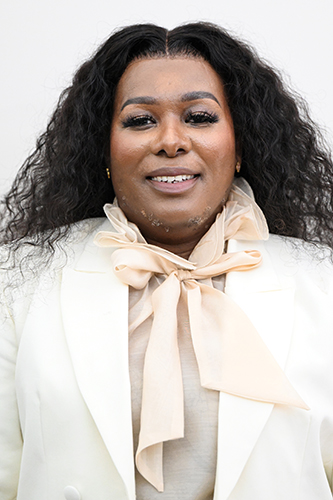
Mr Bhekizizwe Radebe
House Chairperson: Members Support and International Relations
“We gather here to debate the Parliament budget vote, which coincides with the commemoration of the 70th Anniversary of Freedom Charter. This is not merely a numerical milestone, it’s a profound reminder of our nation’s enduring values of freedom, dignity and equality which have shaped our democratic journey.
“It was not only a clarion call for liberation, but also it was a blueprint of the South Africa we continue to build which is grounded on the will of the people. Its visionary proclamation: ‘people shall govern’ is an ethos that has been a cornerstone in shaping institutions such our Parliament. It forged a path towards transparency, accountability and inclusivity of our government.
Parliament stands as a living testament to these ideals, which embody the hopes and aspirations of all South Africans. Even Oliver Tambo was unwavering in his belief of the transformative power of the Freedom Charter. He once declared that: ‘the adoption of the Freedom Charter was daring act of the people asserting the vision of South Africa that belongs to all who live in it. It’s not a blueprint for government, but a declaration of principles for which are prepared die.’
“To him, the charter was more than just a text, it was a revolutionary manifesto, a contract of the future and a biding pledge among equals. He realized that the struggle for freedom required moral courage and an unwavering sense of justice. As we deliberate on this budget, let’s draw wisdom from the unwavering courage of those who drafted the freedom charter 70 years ago.”
Mr Ofentse Mokae (DA)
This budget is allocated against the backdrop of thirty-one years of a democratic Parliament, which is a testament to a profound transformative journey to freedom. But its existence is not synonymous with democracy. But democracy cannot exist without Parliament. As such, this institution should always carry the interests and aspirations of all South Africans. And we, as public representatives, should carry that with great honour and dignity. For South Africans expect us to truly represent them and be in touch with issues affecting them.
“To that effect, Parliament must remain relevant and preoccupy itself with the needs and aspirations of the citizens of this beautiful country. But it’s in committees that we give expression to oversight and accountability over the executive’s actions. Hence, committees have come to be known as engines of Parliament.
“And while Parliament’s findings have improved, it remains insufficient. Funding should address and enhance the important function of public participation, especially with regard to the processing of legislation so that quality public inputs are solicited. But also, this funding must address the critical staff shortages in the Committee Section. Crucial vacant positions of content advisers and researchers should be filled as a matter of urgency.”
Ms Seeng Mokoena (MK)
“I have the greatest respect for the ideals this institution was built upon. This Parliament is the heart of our democracy. It’s the house in which the voiceless should have their voice. Where power is scrutinised and truth is spoken. Where hope is restored when the executive strays. And I must say there are many people who work tirelessly behind these walls: the staff who keep the engine running even after the devastating fire.
“The legal personnel, researchers, content advisers, committee clerks and translators who ensure that our work reaches every corner of this country in every language. As well as the honest Members of Parliament across benches who fight every day to make sure that oversight is more than just a box ticking exercise. We commend that Parliament has managed to maintain a measure of stability in turbulent times.
“We note the clean audit outcomes, which speak of financial discipline in some parts of the administration. We also recognise the efforts to restore the National Assembly and to modernise systems that were outdated long ago. And we see the attempts to professionalise parliamentary services by building better research capacity and by rolling out digital tools to connect more South Africans to Parliament.”
Tamarin Breedt (FF+)
“At this pivotal moment in our nation’s journey, we are confronted by profound and complex challenges. Much like other nations, South Africa is shaped by the relent tide of technological change and political uncertainty. From the instability of our electricity supply to rising unemployment, surging cost of living, pervasive crime to entrenched social issues.
“Our society is facing mounting pressures on every front. The shadow of Covid-19 and scars of state capture still persist. Aggravated by persistent fraud and corruption in public institutions and collapse of service delivery mostly and acutely experienced at the local government level. These compounded difficulties have left us with a troubling legacy, which led to the dramatic erosion of trust in public institutions. And confidence in our government, judiciary and crucially in our Parliament has reached a historic low.
“To restore trust, public engagement in Parliament must be beyond just a formality. Too often, it’s treated as a procedural check box rather than to genuinely integrate the voices and aspirations of all South Africans. This is especially significant in the NCOP because provincial mandates require more inclusive public participation. As NCOP, we must not allow the processes intended to amplify public voices to be reduced to mere rituals.”
Frederik Badenhorst (DA)
“Parliament is not a building, not a brand, a bureaucracy; Parliament is the people. When the people send us here, they do so with the full expectation that we will ask difficult questions and speak truth to power. And to ensure that every cent spent carries the weight of public trust. Before we talk about numbers, let’s talk about principles because there’s something disquieting about being asked to vote on a budget while the basic questions from our own oversight committee: the Joint Standing Committee on the Financial Management of Parliament remain unanswered.
“What confidence can we place on Parliament’s budget vote when parliamentary administration remains unresponsive to repeated committee requests to something as fundamental as the cost of an organogram. We asked about salary scales, we got silence. We asked about the status of temporary advisers in the Office of the Secretary to Parliament and some are now embedded in it for over three years with no accountability and no performance matrix and no explanation. Is this the transparency that the people of South Africa deserve, one can ask. I think not.
Mr Bino Farmer (PA)
“We support this budget that funds the very heartbeat of our democracy – the Parliament. Parliament is not the building, it’s a promise. It’s a promise whose chambers echo the cries of our communities. A promise that no public servant, no department and no executive can stand above the people’s representatives.
“But let’s be honest with ourselves and the people who sent us here, Parliament must do more to earn the respect it demands. Too often parliamentary oversight has become a tick box exercise. Committees sit and reports are tabled but impact on the ground remains invisible. Bills are debated here, but outside of these gates people are still waiting for change.
“We support this budget because we want a strong Parliament. But our support comes with a clear call, Parliament must be more than a speakers’ list. It must be the spearhead of accountability. We must use this budget to strengthen our oversight capacity so that no official escapes scrutiny and no misused rand goes unnoticed. Equip members with modern research tools and expert support so that we can debate facts not slogans. Expand community outreach so that Parliament can be able to sit not only in Cape Town, but in every province, every ward and every forgotten village.”
Mr Mandla Peter (UDM)
“This institution is the cornerstone of our democracy and must serve as the embodiment of the will of the people. The guardian of the constitution and the ultimate forum for democratic accountability. We can’t perform these roles effectively without reflecting on our institutional limitations to boldly chart a new course. One of the most urgent issues that Parliament is faced with is the slow pace of the legislative processes. Too often, we see bills remain stagnant for years. While the needs they seek to address compound in our communities.
“Where other parliaments move with urgency and precision, we delay. In countries such as USA, South Korea and UK, we see bills being processed in a matter of months often with extensive consultation. They afford to do that because they invested in legislative efficiency, rigorous research support and clear timelines. The South African parliament must enhance its legislative drafting capacity, institutional knowledge and time management if it wishes to fulfill its constitutional mandate. But the impact of legislation lies not on its passage, but on how democratic and inclusive its formulation has been. For instance, public participation is a constitutional imperative, but our record on it remains uneven.”
Mr Dennis Ryder (DA)
House Chairperson: Committees
“When I stood here last year, I spoke of a vision to transform our committees into strategic, decisive and outcome driven engines powering the NCOP. I challenge us to harness our constitutional roles as provincial champions. To reassert our leadership of our agendas and to drive the NCOP’s work away from bureaucracy to real service delivery outcomes. Our bicameral Parliament: of the National Assembly and NCOP – is crucial in fulfilling our constitutional mandate.
“Regrettably, the NCOP has, over the years, not enjoyed the same level of attention, prominence and respect afforded to its counterpart. In the eyes of many it has remained irrelevant. Yet, this house has, constitutionally, a uniquely admirable role in our democratic architecture. It’s upon to us to promote the relevance of the NCOP. And help the people to appreciate the work that is done here.
“So, what is the NCOP’s relevance? The answer lies in the principle of cooperative governance. It recognises that no single sphere of governance can deliver effectively in isolation. Without cooperative governance, service delivery stalls, the lives of South Africans remain unchanged, and South Africa can’t move forward. The constitution mandates the NCOP to serve as a forum for provincial interest within the national sphere of government. And also, it’s the voice of local government within Parliament. That is what sets this house apart from the National Assembly. And we are not designed to mimic its functions.”
Ms Tidimalo Legwase (ANC)
“It’s worth noting that Parliament has two chambers: the National Assembly (NA) and NCOP. Often times, Parliament is reduced to the NA. And the NCOP being looked at as a by-the-way house. It’s important to understand this institution so that we are fully aware of its powers, responsibilities and mandate. Our presence in this house is proof that our democracy is alive. In other countries, democracy is a luxury, but in South Africa it’s a lived experience of all citizens whose trust has put us all here in the NCOP.
“Over thirty years, Parliament has gone through different stages that led us to this day. Our work is never complete until the principles of Freedom Charter: the bible of our liberation movement, the ANC, is achieved. As we celebrate this historic document, we must recognise that blood was sacrificed in its inception. Today, no one can deny that we have a robust and functioning democracy. Although our history is written in blood, exclusion and oppression of our people, it was, and it continues to be the ANC that holds the people together the society and nation we all call South Africa. It has been its policies that transformed our society. However, it’s the anti-transformation forces that have since 1994 sought to ensure that that doesn’t happen.”
Ms Mathapelo Siwisa (EFF)
“We reject this budget, which fails to fulfill its constitutional mandate of representing the interests of provinces in the national sphere of government. The Constitution stipulates that the role of Parliament is to oversee the activities of government to realise the quality of life for all the people of South Africa.
“However, this Parliament has been unable to fulfill this primary responsibility of holding the executive to account for many challenges that our people are faced with. Parliament has failed to play its oversight role because it’s the members of the executive who have abandoned their senses of accountability. We can see that in how they respond to oral or written questions. Their responses have turned into mere administrative duties rather than the seriousness needed to address matters brought before their departments.
“Parliament has also demonstrated incapacity and incompetency in resolving many crises confronting South Africans while, on the other hand, the executive has been avoiding genuine accountability and transparency. There exists an absence of standards of accountability in Parliament, that’s why it’s failing to execute its constitutional mandate to hold the executive authority accountable. Under the leadership of this Parliament, we have witnessed austerity measures being intensified. We have seen an increase in the level of unemployment, degeneration of living conditions and the cost of living.”
Mr Kenneth Mmoiemang
Chief Whip of the NCOP
“This budget vote policy debate takes place one year after the historic national elections that ushered in the Government of National Unity (GNU) and in a month that celebrates the birthday of our founding father, Nelson Mandela, which was later declared by UN as Mandela Day for serving humanity. We call upon members of the NCOP to observe this day by making a positive contribution to their respective communities.
“When Mandela bid farewell to Parliament and the people of South Africa on 26 March 1999, he declared, “it’s in Parliament that the tools of transforming our society have been created to improve the lives of everyone. It’s here that government oversight has been carried out, it’s here where our society had a chance to influence policy and its implementation.
“This debate occurs when our country is faced with multiple challenges such as the deepening crisis of new liberal democracy and its institutions which keep on investing and perpetuating the 2008 global economic meltdown. And deepening levels of unemployment, inequality and poverty. This debate also coincides with the 70th anniversary of the Freedom Charter, which remains a tribute to the valiant people of South Africa whose struggle for liberty and freedom found an echo in every part of the world. And I am here like others to affirm the principles of Freedom Charter that underpin the arc principle of our democracy: the people shall govern.
“And democracy is meaningless unless it’s in the hands and shaped by the people, especially the poor, working class and the vulnerable as the architects of their own future. We stand here with confidence to declare that this house has, overtime, become the true embodiment of the Freedom Charter.”
 Arrange a tour