



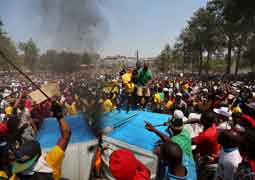
A female staff member at the Cape Peninsula University of Technology (CPUT) spent five days in intensive care following August protests at the institution, the Portfolio Committee on Higher Education and Training heard on Friday, when CPUT briefed the committee on governance challenges and its preparedness for the academic year.
The August protests forced the university to evacuate residences in an effort to quell the violence. The Vice-Chancellor, Prof Chris Nhlapo, said that it is thought that two students were also injured, although this information has not been verified. The protests were largely driven by problems with student accommodation. Students demanded the resignation of the Vice-Chancellor and the head of finance, while workers also joined the protests.
Prof Nhlapo also noted that the insurance claim for the damage amounts to R9.7million. “That’s the cost of infrastructure damage, emergency security, damage to the surveillance system and a vehicle that was set on fire. The last part of the insurance claim that is being finalised is the furniture and equipment.”
The committee also heard that a security company has been appointed and that regular meetings of the institutional forum are now taking place.
The committee Chairperson, Mr Tebogo Letsie, said the committee is concerned that students have to protest before their concerns are heard. “Some students even claim that university management creates the strikes; they always take decisions that will always agitate the students.”
“CPUT remains an important institution within the post-school education and training system, serving thousands and making a significant contribution to skills development, innovation, socioeconomic development in the Western Cape and the country,” Mr Letsie continued.
Deputy Minister of Higher Education and Training Dr Nomusa Dube-Ncube said that, following the protests, the university had made progress with its academic programme. “Despite considerable financial pressure facing the higher education sector, CPUT continues to demonstrate areas of financial resilience. The university has recorded growth in tuition, accommodation and debt-stream income.”
She said the institution had maintained relatively stable audited financial reporting in recent years, while the 2025/26 audit had identified areas requiring improvement in its internal controls and financial reporting and processes.
Sibongile Maputi
20 November 2026
 Arrange a tour