



The transfer of officials facing disciplinary hearings to posts in Community Corrections where they oversee parolees featured high on the Portfolio Committee on Correctional Services’ agenda yesterday when it was briefed on the matter by the Department of Correctional Services (DCS).
The briefing also included a report on parole supervision, the management of absconders, compliance mechanisms, challenges, and measures to strengthen offender tracking.
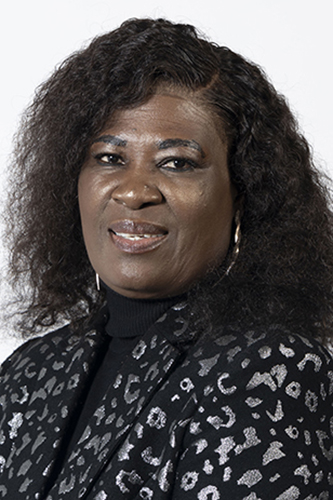
The committee re-emphasised its concerns about this practice of transferring officials while disciplinary proceeding against them are still ongoing. The Chairperson of the committee, Ms Kgomotso Anthea Ramolobeng, said the committee has raised this issue many times and flagged it as a possible concern.
The Chairperson was supported in this view by committee member Mr Mzwanele Sokopo, who emphasised that Community Corrections is used as a place to hold officials who misbehave. “They are transferred there. They are probably lazy and/or corrupt.”
The committee heard that a total of 29 320 parolees have absconded since 1991. Prior to 1991, the parole system was based on aftercare on the part of the then Welfare department and employers, who reported absconding to the DCS.
The DCS registered absconders with the South African Police Service (SAPS), the Criminal Record Centre (CRC) and notified local police stations. Tracing was only possible after reoffending through the CRC, which linked the absconder and the reoffender. The department undertook no tracing itself.
Furthermore, parolees were not supervised from 1991 to 1994 and, in some instances, offenders were declared absconders after their sentence expiry date. Others were declared absconders just before the sentence expiry date. In addition, no conditions were set when placed on parole and no documents and warrants were received by Community Corrections during placement. During the abovementioned period, the number of absconders was 24 221.
Since 1994, relevant and applicable documents have been collated, and since 2021 the specialised track and trace teams have been able to trace parolees. The committee also heard that the DCS’s records have not been reconciled with the Department of Home Affairs and most likely includes inmates who have since died. In response, the Chairperson called on the department to work with the Department of Home Affairs to clean up the data to obtain a clear picture of the issue. “It’s a matter of basic administrative integrity and must be attended to urgently,” she said.
Committee Member Mr Sam Moela said that as the figure is cumulative and dates from 1991, many South Africans are under the impression that there are 28 000 active parolees running around the streets. He called on the department to communicate clearly with the public on this issue to rectify the misinformation.
The Chairperson said the committee welcomed the reinstatement of an inmate tracking and tracing unit. “We will monitor this closely and hold the department to account.”
She said at the start the meeting that recent media articles have alleged that some 28 000 parolees have absconded and are untraced. The DCS has since rejected the allegations. Several committee members requested an urgent meeting in order to receive an official update on the matter.
The committee expressed its support for electronic monitoring bands for parolees and urged the DCS to move with speed to deal with litigation on this matter. The committee is of the view that electronic monitoring will assist in tracking parolees and ensuring that they abide by their parole conditions.
Committee Member Mr Ernest Hendricks said electronic monitoring and a dashboard to ensure parolees abide by conditions imposed would have picked up this problem a long ago.
Ms Ramolobeng said electronic monitoring will help with Community Corrections’ current caseload. “We were told the caseload in Gauteng is one official per 127 cases and in the Eastern Cape it is one official for every 110 inmates, whilst the ideal ratio is 1 to 30. These officials are carrying more than three times the ideal case load. Technology like electronic monitoring will therefore be extremely helpful,” emphasised the Chairperson.
Rajaa Azzakani
10 June 2026
 Arrange a tour