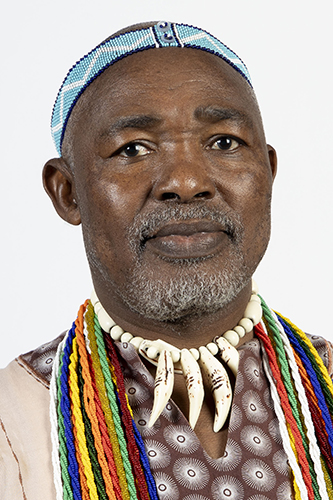
The Ad Hoc Committee to Investigate Allegations made by the South African Police Service (SAPS) KwaZulu-Natal Provincial Commissioner, Lieutenant General Nhlanhla Mkhwanazi, today provided committee members with an opportunity to engage with Police Minister Senzo Mchunu.
Minister Mchunu has been presenting his submission and engaging with the committee since 16 October on the disbanding of the Political Killings Task Team (PKTT), political interference and the infiltration of gang syndicates into South Africa’s criminal justice system.
Committee member Ms Thokozile Sokanyile was the first to raise questions. She queried the timing of the directive issued by Minister Mchunu on 31 December 2024, while National Police Commissioner General Fannie Masemola was on leave, which she found unusual. In response, the Minister explained that he wanted to ensure the new year began with renewed purpose on critical crime issues affecting the country.
Committee member Mr Xola Nqola raised concerns about the alleged audio “threat” attributed to Lt Gen Mkhwanazi. He noted that Minister Mchunu had not provided the committee with the audio recording. “At this stage, there is no threat before the committee,” Mr Nqola noted. Committee Chairperson Mr Molapi Soviet Lekganyane clarified that the Minister had explained on Friday that he did not possess the portion of the recording containing the alleged threat, as the recording appears to have begun after that moment.
Another committee member, Mr Sibonelo Nomvalo, asked whether Minister Mchunu had consulted President Cyril Ramaphosa before issuing the directive to disband the PKTT. The Minister confirmed that he had not informed the President beforehand, but did so afterwards.
Another member, Mr David Skosana, also inquired about any consultations the Minister undertook prior to the decision to disband the PKTT. Committee member Mr Damien Klopper added to this line of questioning, asking whether Minister Mchunu had spoken to Mr Brown Mogotsi on the day he drafted the directive, noting that call records indicate a conversation.
Minister Mchunu added that he only knew Mr Mogotsi vaguely as a “comrade”, saying: “I’ve never enquired about his personal life; we just occasionally talk about this and that.”
The Minister also denied having any relationship with Mr Vusimuzi “Cat” Matlala, an accused member of the so-called “Big Five” organised crime group. “I have never met Matlala. I have never seen him with my naked eye,” the Minister stated.
Committee member Mr Wouter Wessels added further questions about whether Mr Mogotsi or Lieutenant General Shadrack Sibiya had spoken to the Minister about the disbandment of the PKTT. He also inquired about Mr Cedrick Nkabinde’s role and whether he had advised the Minister on the matter.
Mr Julius Malema questioned the Minister at length on his acceptance of an affidavit from Mr Matlala, who is currently incarcerated at a C-Max facility and facing attempted murder charges. “There are all these allegations about Matlala, yet you still sought an affidavit from him,” Mr Malema said. Minister Mchunu responded that the affidavit from Mr Matlala denied any improper dealings with him, and that the false allegations made by Lt Gen Mkhwanazi should be thoroughly investigated.
Mr Malema further accused the Minister of providing inconsistent explanations on how his lawyers obtained the affidavit, noting that three different versions had been presented. “You said your lawyers went without your instruction, then that you instructed them, and then that Matlala wrote to your lawyers uninvited. Which answer should stand?” he asked.
Committee Member Mr Mangaqa Mncwango asked whether activist Ms Mary de Haas had influenced the Minister’s decision to disband the PKTT, suggesting that the tone and language in Ms de Haas’s correspondence to the Minister appeared to have shaped his approach.
The committee will continue its inquiry to establish the facts surrounding the allegations and the decisions related to the disbandment of the PKTT.
Rajaa Azzakani
22 October 2025
 Arrange a tour