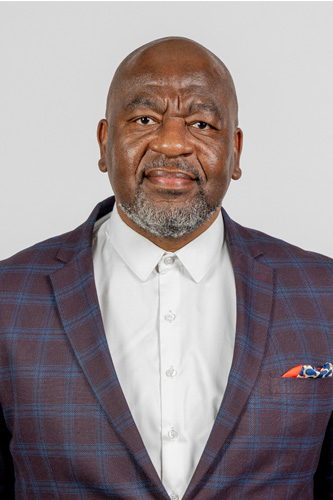



The Chairperson of the Portfolio Committee on Higher Education, Mr Tebogo Letsie, has called on Nelson Mandela University (NMU) to urgently address maintenance challenges in its student residences and review concerns around student allowances and accommodation practices following an oversight visit to the campus.
During a site inspection of several on-campus residences, the committee found that some facilities require improved maintenance to ensure students live in safe, clean and dignified conditions.
“Student accommodation is not a luxury; it is central to academic success,” said Mr Letsie. “If students are expected to perform academically, they must live in environments that are safe, well-maintained and conducive to learning. Management must prioritise maintenance and act swiftly where there are shortcomings.”
The committee also heard strong concerns from the NMU Student Representative Council (SRC) President, Ms Somila Komani, regarding the university’s meal management system. She argued that the current allocation under the system is insufficient and that hunger is directly affecting academic performance. The meal management system is a cashless one, in which students use their student cards or an app to purchase meals at campus food outlets. The SRC further raised concerns that students funded by the National Student Financial Aid Scheme (NSFAS) are effectively compelled to use the system when staying in on-campus residences.
Mr Letsie clarified that the committee is not opposed to the meals system in principle but stressed that students should not be forced into the system without proper consultation. “We are not against the meal management system,” he said. “However, nothing defeats consultation. These issues require meaningful engagement to reach consensus. Students lived realities must be considered.”
He noted that many NSFAS-funded students come from disadvantaged backgrounds and often support their families with part of their allowances. “Some students use part of their NSFAS allowances to assist families back home. Others use it to buy groceries or basic necessities. Forcing them into one system without flexibility may unintentionally create more socio-economic pressures,” he said.
Mr Letsie cautioned that allowance flexibility must be handled responsibly. “If students opt out of the system, we also do not want a situation where funds are misused on online betting platforms, as reported previously, leading to further hardship. The solution lies in proper consultation and balanced decision-making.”
Another serious concern raised relates to private accommodation accredited by NSFAS. Students alleged that some landlords are demanding illegal top-up payments and manipulating grading outcomes during inspections, thereby misleading students about the true grading of the accommodation.
The committee reiterated its longstanding recommendation that NSFAS should conduct lifestyle audits of officials responsible for accrediting private accommodation to safeguard the integrity of the system. Committee members also recommended that joint inspections involving NSFAS and other relevant stakeholders could improve transparency and protect students from exploitation.
Mr Jason Barnes representing labour unions at the university raised concerns about the employment of foreign nationals at the university, saying that relations between organised labour and unions is not cordial. In response, the committee sought clarity from university management on its policies. The university’s Vice Chancelor, Professor Sibongile Muthwa, said the university indicated that it does not actively recruit foreign nationals in positions where suitably qualified South Africans are available and that there is no institutional policy regulating the employment of foreign nationals.
The committee emphasised the need for clear and transparent frameworks to avoid misunderstandings and ensure compliance with national labour priorities. The committee urge the Department of Higher Education and Training (DHET) to assist institutions to navigate the employment of foreign staff with the department’s Director-General, Dr Nkosinathi Sishi, confirming his willingness to assist.
Despite the concerns raised, the committee commended the university for the number of women occupying leadership positions. Committee members described this as a positive development that strengthens gender transformation in higher education.
Mr Letsie concluded that the issues raised, from accommodation conditions to food security and private landlord practices, require urgent and coordinated efforts.
“Our responsibility is to ensure that no student’s academic future is compromised by preventable challenges,” he said. “Institutions, NSFAS and all stakeholders must work together to protect student dignity and create conditions where learning can truly thrive.”
Jabulani Majozi
5 February 2026
 Arrange a tour