Members of Parliament’s Portfolio Committee on Cooperative Governance and Traditional Affairs (COGTA) on Friday on Friday raised several policy and implementation issues during preliminary discussions on the Draft Traditional and Khoisan Leaders Bill.
The Department of Traditional Affairs provided the committee with an update on the draft Bill’s content and the progress made in preparing the Bill and the framework for recognising Khoisan leadership structures. The draft Bill, which will be formally tabled later this month, seeks to formally recognise the Khoi and San communities and their leadership structures and to address deficiencies in the Traditional Leadership and Governance Framework Act of 2003.
The new Draft Traditional and Khoisan Leadership Bill of 2026 was introduced following a Constitutional Court judgment declaring that the process followed by Parliament and the provincial legislatures in the processing of the Traditional and Khoisan Leadership Bill was deficient, failed to facilitate meaningful public participation and therefore rendered the Act unconstitutional and invalid. Initially, the invalidity was suspended for two years to allow Parliament time to process a revised version that complies with constitutional prescriptions. Following a successful application to extend the two-year deadline, a new date was set for May 2027.
The draft Bill retains several principles of the 2019 Act but also introduces some improvements. Some of these improvements are relate to the recognition of Khoi-San kingships and queenships, stronger community participation, proportional representation, mandatory genealogical documentation and a requirement for 50% representation of women in leadership structures.
The committee welcomed the department’s update as it provided important insight into its approach as Parliament prepares to begin the formal legislative process. Committee members, however, flagged several issues that will require further consideration. One member, Mr Glen Taaibosch (Umkhonto weSizwe Party), stressed the importance of addressing the historical land question when recognising traditional leadership. “Unless we remove that 1913 (date) when we talk about land, most of the Khoi-San people will never have land, and what used to be all their land. So, if that question is not addressed, how would I be a king or a queen if I don’t have any land?” he asked. Members also highlighted the complexity of recognising communities living in urban and cosmopolitan settings who identify with Khoisan heritage but do not reside within traditional territorial areas.
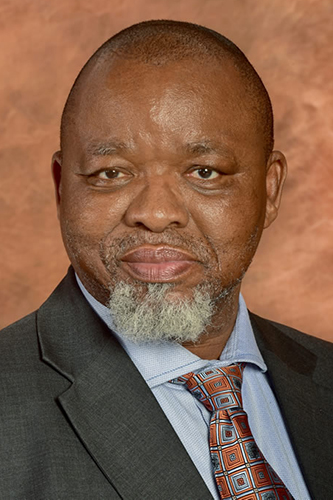
The Chairperson of the committee, Dr Zweli Mkhize, agreed and reiterated some of the concerns. “The issue of land and the legacy of the 1913 Land Act becomes a major question when we talk about restoration and recognition,” said Dr Mkhize. Another matter raised was the challenge of recognising leadership structures where hereditary lineage may exist, but where territorial jurisdiction is unclear. The Chairperson also reiterated concerns about communities whose customs and institutional memory may have been weakened over generations due to colonisation and displacement. “You do need to find mechanisms to deal with situations where the institutional memory of customs and traditions has been eroded over time,” the Chairperson said.
Another issue raised during the meeting was whether the government is considering a broader policy review of traditional leadership. “There was mention of a possible White Paper on traditional and Khoisan leadership. It would be useful for the department to clarify whether such a process is being considered, whether it has begun or whether it remains an idea under discussion,” the Chairperson said. Dr Mkhize also noted that the processes used for recognition and the authority of the commission responsible for determining kingship and queenship may require further refinement. “These processes will require continuous refinement so that they do not become obstacles when communities feel certain principles have not been properly considered.”
The committee noted that the Bill marks an important step in addressing the long-standing recognition of Khoisan leadership. The Chairperson, however, cautioned that the recognition process for Khoisan leadership is likely to be lengthy and complex. He said the committee hopes to move the Bill forward as efficiently as possible. However, the pace of progress will depend on the level of consensus reached among communities and stakeholders, he said.
Alicestine October
13 March 2026
 Arrange a tour