


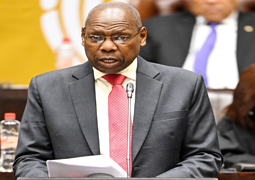
The Chairperson of the Portfolio Committee on Cooperative Governance and Traditional Affairs, Dr Zweli Mkhize, along with several members of the National Assembly (NA), has called for accelerated reforms in the local government sector to improve service delivery, curb dysfunction and improve the country’s resilience against disasters and corruption.
Speaking during the budget vote debate in a mini-plenary of the National Assembly on Thursday, Dr Mkhize reaffirmed the committee’s commitment to ensuring local government functions as the primary interface between the public and the state. He also made it clear, “Local government must be fixed – full stop.” “We must work hand-in-hand, across party lines, to restore functionality and trust in local governance,” he urged. “This budget vote debate is proof that our commitment to work hand-in-hand to realise the vision of efficient and effective local government goes beyond political party lines. There is consensus that we need to make local government work,” Dr Mkhize said.
Presenting the budgets for Vote 3 (Cooperative Governance) with an allocation of R410.9 billion, and Vote 15 (Traditional Affairs), with an allocation of R195.5 million, the Minister of Cooperative Governance and Traditional Affairs, Mr Velenkosini Hlabisa, said 96.7 per cent of Vote 3 would go to intergovernmental transfers. He also reaffirmed that a review of the 1998 White Paper on Local Government is underway, adding that it aims to address challenges such as urbanisation, governance instability and revenue shortfalls. “This review is not a ceremonial exercise. It is a strategic imperative,” he said.
Protect whistleblowers
Highlighting in his speech the recent assassination of the audit chief of the Ekurhuleni metro, Mr Mpho Mafole, Dr Mkhize decried the growing trend of violence against public officials. “We call for the protection of those on the front line – the whistleblower, the investigator, the honest public servant who will refuse to be corrupted,” he said.
The Chairperson also highlighted the role of local government as a catalyst for economic growth and social development, warning that dysfunction at the municipal level has dire consequences for communities, businesses and the nation’s development. Citing recent audit findings by the Auditor-General, he described the current state of many municipalities as a “terrible indictment” on all spheres of government.
Improve disaster management
Managing climate-related disasters was another key theme in the debate, with several MPs urging for strengthening early warning systems, improved and timely disaster funding and integrated planning to prevent future tragedies like the Eastern Cape floods. One hundred and seven lives were lost, thousands were displaced and critical infrastructure, including schools and clinics – was destroyed. Concerns were also raised about unequal allocations in disaster funding. “Some communities,” the Chairperson said, “remain left out from assistance, years after being affected.”
Echoing Dr Mkhize’s emphasis on disaster readiness, Mr Nhlanhla Hadebe from the Inkatha Freedom Party (IFP) commended the minister for a swift and compassionate response to the Eastern Cape floods, praising the classification of the disaster and the deployment of technical teams. Mr Hadebe warned, however, that “chronic underfunding” of the department threatens its ability to support municipalities.
In his speech, the minister affirmed the department’s commitment to fast-track disaster relief, with R1.2 billion already disbursed for the February 2025 floods and further funds expected to be finalised by early August. “I am partially pleased that on Monday, 7 July 2025, we communicated the release of R1.255 billion to the Eastern Cape, KwaZulu-Natal, Free State, Mpumalanga, Limpopo, and North-West to address the February 2025 disasters. The Eastern Cape will receive R504 million of the R1.255 billion,” the minister said. “We will build back better,” Minister Hlabisa said.
Dr Mkhize also highlighted the need for local municipalities to leverage legislative tools, such as the Expropriation Act, to advance spatial justice. “Thirty years on, this apartheid spatial injustice has still not been addressed,” he said. The Chairperson also emphasised the need for financial discipline and municipal innovation. “Municipalities must be capacitated to develop and retain skills, and we must reduce reliance on consultants.”
Include and support traditional leadership
Traditional leadership was another recurring theme during the budget vote debate. While the minister announced intensified efforts to support traditional leaders, including finalising the recognition processes for Khoi-San communities and expanding infrastructure support through the Royal Palace Infrastructure Project, the Chairperson said, “Local economic development, spatial justice and viable municipalities are an outcome of an active traditional leadership authority.”
Political stability in municipalities
On governance, Dr Mkhize advocated for an “aggressive approach” to oversight, focused on joint accountability, consequence management and reversing negative audit outcomes. He also highlighted the challenges posed by coalition governments, noting the instability they introduce in metros such as Johannesburg, Tshwane and Ekurhuleni. “We urge the department to fast-track legislation to stabilise the management of hung municipalities. Our approach to coalitions must be mature and not be driven by individual whims and egos,” Dr Mkhize said.
Representing the Economic Freedom Fighters (EFF) in the debate, Ms Hlengiwe Mkalipi said her party rejects the budget. She listed service delivery failures and a lack of accountability, particularly regarding the Eastern Cape floods, as among the party’s concerns. “We were told that 222 temporary residential units had been provided out of 4 000 affected households… but when we visited the site, not a single unit was there,” she said. The party proposed several reforms, including increasing the local government’s share of the national budget to 20% and ensuring vacancies are filled within three months, or consequences must follow. “Without structural reforms, dysfunction will persist,” she said.
Ms Marina van Zyl (Democratic Alliance) called for greater accountability and consequences for corrupt municipal administrations. Ms van Zyl also stressed the need for municipalities to be both administratively sound and economically active. She highlighted cutting red tape, attracting investment and ensuring strong local revenue bases as key to job creation and economic growth. “South Africans are not demanding perfection, but reliable basic services and fairness,” she said.
Mr Mmusi Maimane, leader of Build One South Africa (BOSA), supported the budget but called for urgent reforms to the municipal funding formula and improving political instability. He used Johannesburg as a case study to illustrate systemic failure. “Johannesburg is emblematic of all that is going on in our country...” He highlighted the misuse of R90 billion in city funds and criticised the revolving door of mayoral leadership. Referencing the Auditor-General’s reports of R50 billion lost annually, he recommended the deployment of chartered accountants to municipalities for financial oversight to address corruption and wasteful expenditure.
Alicestine October
11 July 2025
 Arrange a tour