



The Minister of Correctional Services, Dr Pieter Groenewald, has told the National Assembly that reduced budget allocations will severely affect the department’s ability to effectively deliver on its mandate.
Presenting the department's Budget Vote for debate in a mini-plenary of the National Assembly, the Minister said budget cuts constrain operations and compromise the department on security. “The cut of our budget translates to the provision of security equipment being compromised, capital investment in skills development were cut, budget of nutritional services had to be cut, capital works projects will be on hold and the monitoring of parolees could be negatively impacted,” the Minister said.
Over the past five years, the department’s budget allocation has been reduced by more than R11 billion, the Minister said, while announcing the department’s appropriation for 20255/26 is R29,2 billion, increasing to over R30,5 billion for the 2026/27 financial year and reaching R31,9 billion in the 2027/28 financial year.
The Minister told the mini-plenary that the capital budget shortfall of R220 million undermines his department’s ability to do its business and they are thus exploring alternative revenue streams so that the department does not rely solely on the fiscus.
With limited resources the department is struggling to address challenges such as overcrowding in correctional facilities, dilapidated infrastructure, a rising number of remand detainees, staff shortages, the presence of crime syndicates and gangs within prisons and emerging crime patterns that pose challenges to rehabilitation programmes.
“The escalating cost of food is fueled by inflation and the growing number of inmates, including a sharp increase in foreign nationals … Our digital transformation agenda is also under threat due to constraints in the government information technology office, where infrastructure modernisation is not urgent and is underfunded,” said Dr Groenewald.
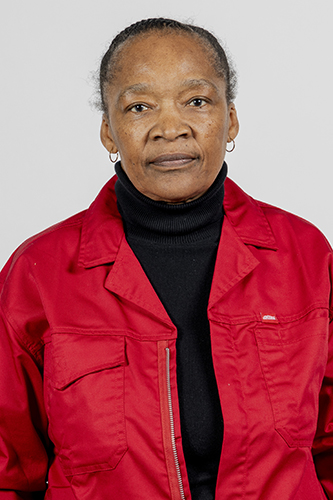
Participating in the debate in support of the budget, Ms Kgomotso Ramolobeng, the Chairperson of the Portfolio Committee on Correctional Services (ANC), said the department must use the budget to ensure that everyone in South Africa is safe and feels safe, as expected by the National Development Plan vision 2030.
She also reported on the committee’s unhappiness about the state correctional facilities and the poor performance of many contractors appointed by the Department of Public Works and Infrastructure to carry our maintenance work in correctional facilities. “The committee was disappointed to observe some of the conditions and lack of maintenance in correctional facilities, the observation include unkept kitchens and nonworking ports.
“The committee was forced to recommend the closure of the kitchen at the Durban Westville correctional facility because it did not meet the minimum health and safety requirements. We also noted several other kitchens that had to close down due lack of maintenance,” she said.
She called on the Public Works department to take its mandate of caring for all government buildings more seriously. She also welcomed the DCS’s plans to assume the management of Mangaung and Kutama Senthumule prisons, when the contracts for the public-private partnership come to an end in 2026 and 2027 respectively. “Law and order are a key function of any government, and this duty should not be delegated to the private sector. The success of any correctional facility should be judged on its ability to rehabilitate offenders and reduce the rate of recidivism, and the private prisons have failed in this area, said Ms Ramolobeng.
The uMkhonto weSizwe Party, through its representative Mr Musawenkosi Gasa, rejected the budget vote, saying it was not aligned with the urgent needs of South Africa’s correctional system. “This budget disproportionately favors incarceration over rehabilitation, with 79% of the R29 billion allocated towards administration (R5,2 billion), and incarceration (R17,9 billion). Rehabilitation and social reintegration programmes to reduce recidivism receive a mere 12%. This punitive approach contradicts the department’s mandate to rehabilitate offenders and reintegrate them as law-abiding citizens,” Mr Gasa said.
Debating on behalf of the Democratic Alliance, Ms Kabelo Kgobisa-Ngcaba, pointed out that the budget plans presented to the committee failed to state the department’s priorities. “We need a concise list of priority focus areas that address the biggest challenges first and those the department can realistically solve within its budget. We expected corruption to be a priority since stopping the outflow of unlawful funds would leave the department with more money to spend,” she said.
Ms Kgobisa-Ngcaba proposed various potential priority areas, including perimeter fencing for prisons, which would prevent criminals from escaping and also curb the inflow of contraband. She also mentioned staffing and construction and maintenance as other potential priority areas.
She suggested that the department should use the time between now and the next budget cycle to create a truly visionary performance plan and a budget allocation that will tackle the biggest problems first.
Ms Betty Diale of the Economic Freedom Fighters also rejected the budget on the basis that it was inadequate to address the department’s needs. “The allocation is woefully inadequate to cater for the real needs of the department and enable it to fulfill its constitutional mandate. The EFF cannot support a budget that is insufficient, undermining humane incarceration, rehabilitation and societal protection. It clashes with our vision of a just, transformative and equitable correctional system rooted in job creation, anti-corruption and anti-outsourcing,” she said.
Sakhile Mokoena
2 July 2025
 Arrange a tour