Presenting her department’s R2.9 billion budget vote to the National Assembly for debate, the Minister of Small Business and Development, Ms Stella Ndabeni, remarked the department’s budget reflects its commitment to achieving an equal and just society, and bringing South Africa’s youth into the economy. “We are focused on building a more inclusive, efficient and high impact SMME [small, medium and micro enterprises] support system that would empower youth and women, especially in township and rural areas,” Ms Ndabeni said.
She added that the department plans to deliver a new service delivery model and is aiming to achieve greater impact for money spent. The Minister also noted some legislative gaps that the department plans to fill to create a conducive environment for SMMEs and cooperatives to thrive. To that end, the department is waiting for other government departments to use the Small Enterprise Act to finalise the inception of the Small Enterprise Development and Finance Agency and the Office of the Small Enterprise Ombud to provide recourse to small enterprises. The department is also going to create an alternative rating system and a registry of movable assets to address the lack of collateral among the SMMEs borrowers.
This budget has three priority areas, Ms Ndabeni said. Firstly, the department will use R300 million to recapitalise the Youth Entrepreneurship Fund. Secondly, the department plans to launch the Women Entrepreneurship Fund and, thirdly, the department plans to launch a development fund for new entrants and high-risk borrowers and commercial fund for growth-ready SMMEs.
Participating in the debate of the budget vote, Ms Carol Mafagane (MK), criticised what she called the department’s broken promises to drive inclusive growth and job creation. She said that although the department’s annual performance and strategic plans offer a polished narrative of supporting SMMEs by cutting red tape and enabling market access, in reality, this is nothing more than hollow slogans. What is more, Ms Mafagane said, the department continues to work in isolation and there is no coordination across departments. She urged the department to improve coordination in the support it offers to informal businesses and rural enterprises. The MK Party rejected the department’s budget.
Meanwhile, Mr Henro Kruger of the Democratic Alliance noted that South African entrepreneurs are trapped in red tape, regulations, broken promises and bureaucratic failures. This is the case despite SMMEs’ immense contribution to the economy. “They employ more than 60% of our population and represent the hopes of 20 million South Africans, excluded from the mainstream economy. But why are they burdened with policies that are outdated?” Mr Kruger asked. To prove his point, he pointed out that since 2014, this department has not introduced one piece of reform legislation. “Let’s move beyond politics and consider the young entrepreneur who is holding a dream on one hand and a rejected application on the other,” he urged.
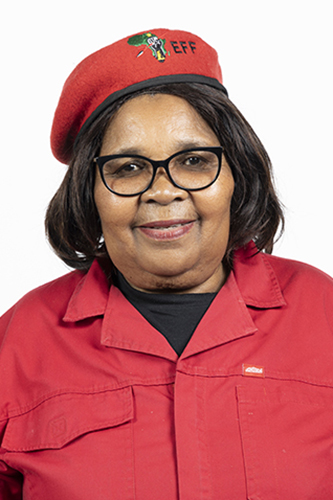
The EFF’s Ms Babalwa Mathulelwa said her party rejects the department’s budget vote because it does not promote the aspirations of SMMEs. “We urged the department to cut the middlemen that call themselves wholesale lenders, incubators and intermediaries, which get R1.6 billion allocations from the department’s budget, leaving the department with R300 million out of its R2.9 billion,” she said.
The IFP welcomed the 6% upward adjustment of the department’s budget, said Mr. Bhekizizwe Luthuli. However, he stressed that this increase must be “matched by measurable outcomes and impact”. Although a portion of the budget is earmarked for transfers and subsidies, the question remains whether the department’s agencies charged with these tasks are ready to deliver on their mandate, particularly in underserved communities, he suggested.
Action SA also supports the department’s budget, said Ms Lerato Ngobeni. This is because SMMEs are the heartbeat of the economy and it would be wrong not to support efforts that seek to support SMMEs, she argued. However, she cautioned that unregulated spaza shops that operate outside the law should not be tolerated.
Mr Wayne Thring (ACDP) noted the important role the SMME sector plays in addressing youth unemployment and in promoting economic inclusion, especially in underserved areas of South Africa. “We note the budget allocation of R2.9 billion to the department with significant increase in the development finance sector, market support and township enterprise promotion, but despite the allocation of billions to the department in successive years, outcomes are often opaque,” he claimed.
Mr Makashule Gana (Rise Mzansi) was concerned with how the department’s budget will be spent. “We must make sure that every rand allocated, policy the department proposes and programme it implements must bring us closer to a prosperous South Africa,” he stressed.
Abel Mputing
30 June 2025
 Arrange a tour