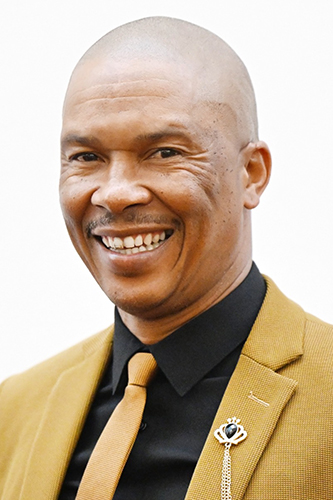
According to her, one of the major milestones of the district is its eradication of the bucket system. "What is interesting about the projects of this district is that they speak to the challenges of its rural communities, one of which is its success in eradicating the bucket system in this district. That is a major achievement that is in line with the national agenda of eradicating the bucket system."
This achievement forms part of its forward-looking plan to improve sanitation in this district. "Sanitation has improved greatly in this district and that must be attributed to the forward-looking plans of the district municipality. This has ensured that it delivered to its growing population the necessary sanitation services."
However, she would like to see the district putting a much concerted effort in promoting agriculture. "Agriculture must not lag behind in the programmes of this district because this is mainly a rural district. As such, agriculture can be harnessed for poverty alleviation programmes. But most of all, it can be utilised to unlock job opportunities and other agriculture-related value chains to facilitate economic growth in this district."
Now that this district has embarked on major water infrastructure, there is need to ensure that the service providers plough back to these communities through their corporate social investment programmes. "The district must ensure that corporate social investment is part of the contractual agreements with its respective services providers to ensure that they plough back to these communities."
The Leader of the NCOP delegation on the district, Ms Phindiwe Samka, stated that they have taken in cognisant the district's complaint about the lack of cooperative governance between the district and the provincial departments. "We are now aware of the lack of proper cooperative governance and that is the core mandate of the NCOP and we cannot allow that to be flaunted. Most of all, we cannot allow a situation in which the departments send junior staff that carries no mandate to contribute to the resolution of issues between these two spheres of governance. We will try our level best to help resolve this matter as speedily as possible."
The Speaker of the Alfred Nzo District Municipality, Mr Sandile Sello, emphasised that any assessment of the performance of this municipality must take into consideration that it inherited a dilapidated former homeland infrastructure that was not meant to serve the interests of all the residents of this district equitably. "Let there be recognition of the fact that we have inherited a dilapidated infrastructure that is mostly outdated and was not meant to serve the interests of all in this district. We now have to find inventive ways of dealing with the increasing needs of the growing population of this district. This will continue to be a problem until we get a special funding as part of the municipal infrastructure capitalisation meant to resolve a matter like this one."
In the public meeting Mr Zamicebo Njobe raised his frustration about the suppression of the outcomes of the referendum on the demarcation of Matatiele. "In 2009 there was a referendum to determine to which province we want to belong. To this day the results of this referendum are not yet released. We have done all we could to follow the necessary due process about this matter, to no avail. We ask the NCOP to help us to ensure that we get these results in 30 days."
Mr Wele Mdolomba complained that the people of Matatiele are being discriminated against for voicing their desire to fall under KwaZulu-Natal instead of the Eastern Cape Province. "Now that we have voiced our displeasure for being placed under the Eastern Cape Provincial administration we, the people of Matatiele, are now discriminated against. For instance, we now have to go to Mthatha Hospital for major medical procedures, but recently someone I know who was very ill was not taken care of there, instead she was left to lie on a floor while she needed an urgent medical attention."
Mr Ntlatlane Letlotlo also raised the health challenges that Matatiele communities are faced with since they have been placed under the Eastern Cape Province. "What is most painful is that even if one has a broken arm, one has to go to Mthatha Hospital. And that is very expensive considering the fact that Mthatha is well over 200km from Matatiele. Sometimes people die on their way to Mthatha Hospital."
By Abel Mputing
24 July 2015
 Arrange a tour