


Access to safe, affordable and dignified accommodation is widely recognised as an important part of student success. However, student accommodation remains a contentious issue across South Africa’s post-school education and training system.
For thousands of first-time entrant students, their academic journey often begins in uncertainty, even after they have earned university placement through hard work and determination: Where will I stay? Will it be safe? Can my family afford it?
The Portfolio Committee on Higher Education and Training recently held a colloquium to address the challenges facing students in accessing accommodation as they pursue their education.
Over the past three decades, access to higher education has expanded significantly. However, the growth in student numbers has not been matched by a similar expansion of student accommodation and other supporting infrastructure. The gap has created an opportunity for the growth of private student accommodation providers, many of whom primarily provide accommodation to students funded by the National Student Financial Aid Scheme (NSFAS).
At the centre of the debate is the NSFAS accommodation cap, which was introduced to help regulate the sector and protect students from excessive accommodation costs. Students have argued that the cap does not always reflect the range of market conditions and accommodation costs in various cities and towns. Universities have raised concerns about the implementation of the cap, while private accommodation providers have questioned whether the current funding model is sustainable.
The colloquium provided a platform for frank and constructive discussions on the NSFAS accommodation cap, funding and accreditation processes, as well as the factors driving accommodation costs across the sector.
Key stakeholders in the student accommodation value chain participated in the colloquium. These included the Department of Higher Education and Training, NSFAS, student leadership organisations, Universities South Africa, the South African Public Colleges Organisation, the Competition Commission, the Private Student Housing Association and the Property Practitioners Regulatory Authority, among others.
Accommodation and Student Success
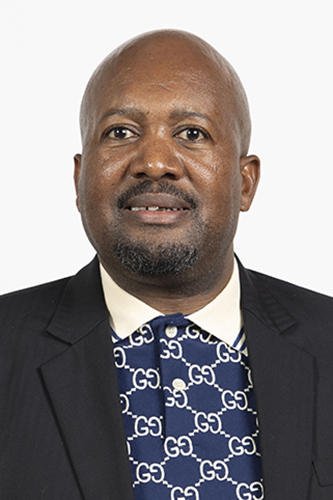
Opening the colloquium, the Chairperson of the Portfolio Committee, Mr Tebogo Letsie, said thousands of young people arrive at universities and TVET colleges carrying the hopes of their families and communities. He noted that for many students, the promise of higher education was not undermined in lecture halls, but by the conditions in which they live.
“The committee has deliberately brought all stakeholders into one room because sustainable solutions cannot emerge from isolated conversations. We need government, institutions, students, regulators and the private sector to engage honestly with one another,” said Mr Letsie.
He stressed that accommodation should not be treated as a secondary issue, because it directly affects a student’s ability to participate and succeed in their studies.
The Minister of Higher Education and Training, Mr Buti Manamela, echoed these concerns. He said student accommodation is not simply a debate about a funding cap, an accreditation portal or a funding formula. In fact, accommodation could determine whether a student started the academic year with dignity or was left without a place to stay; whether a student attended class rested or after a night of uncertainty; and whether access to education translated into a meaningful opportunity in the lives of young people.
The NSFAS Accommodation Cap
NSFAS briefed the colloquium on its role in funding student accommodation, managing accreditation and enforcing the accommodation cap within its legal mandate. NSFAS indicated that approximately 80 per cent of university students receiving funding were funded for accommodation. Funding in the technical and vocational education and training sector was also growing, although at a more moderate rate.
NSFAS explained that it manages payments for both institution-based and private accommodation through third-party service providers. NSFAS Chief Executive Officer Mr Waseem Carrim said the organisation has a statutory mandate to impose accreditation conditions and determine funding caps. However, he clarified that NSFAS does not have the power to set or impose accommodation rates on private providers above its funding cap.
Stakeholders raised concerns about whether the current cap adequately reflects differences in accommodation costs across geographical areas. There were calls for greater consideration of location when determining the cap, as well as regular reviews based on reliable evidence and prevailing market conditions.
The committee urged NSFAS to ensure timeous payment to accommodation providers, as nonpayment means they cannot pay for their municipal services and ultimately it is the students who suffer
Challenges Facing Accommodation Providers
The South African Student Accommodation Providers Association raised concerns about delays and challenges in receiving payments. The association said frequent changes to payment dates had affected accommodation providers, particularly small businesses that rely on timely payments to meet their operational costs.
These concerns highlight the need for greater certainty and efficiency in the payment system, while ensuring that students remain protected from excessive accommodation charges.
Competition Commission Investigation
The Competition Commission also briefed the colloquium on a complaint lodged by the Department of Higher Education and Training relating to alleged collusive behaviour in the student accommodation market, particularly in the provision of accommodation to NSFAS-funded students.
The Competition Commission confirmed that its investigation is still ongoing. It further informed the colloquium that it has developed a practice note aimed at raising awareness among accommodation providers, higher education institutions and other stakeholders involved in the provision, accreditation and regulation of student accommodation.
The committee welcomed the engagement and emphasised the importance of finding sustainable solutions to ensure that students have access to accommodation that is safe, affordable and dignified.
The discussions at the colloquium demonstrated that addressing student accommodation requires a coordinated effort between government, institutions, NSFAS, students, private accommodation providers and the relevant regulatory bodies. Student accommodation is not merely a funding or administrative matter. It is an essential part of creating a higher education system in which students can study, participate and succeed without the added burden of worrying about where they will sleep.
Mr Letsie said he was pleased that there was consensus on the need for an accommodation cap, rather than its complete removal. “Without the NSFAS cap, the sector would not be regulated, and pricing could be determined without considering students, ultimately resulting in government paying for overpriced accommodation. We must view this funding as a mechanism to protect the entire education system. We cannot have an NSFAS system that does not work,” said Mr Letsie.
Finally, Mr Letsie warned that it is unsustainable for government to fund an education system in which 94 per cent of student funding is spent on accommodation and transport.
Jabulani Majozi
31 August 2026
 Arrange a tour