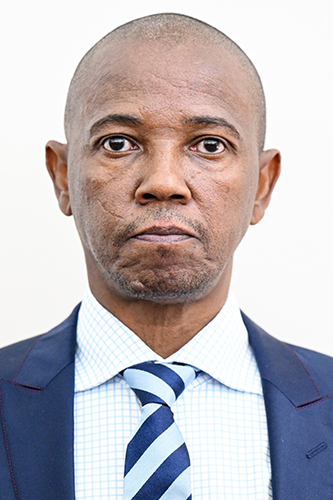
On day four of public hearings, the Ad Hoc Committee established to investigate allegations made by the South African Police Service’s (SAPS) KwaZulu-Natal Provincial Commissioner, Lieutenant-General Nhlanhla Mkhwanazi, heard testimony from well-known whistleblower Ms Patricia Mashale.
Ms Mashale implicated senior police officers and politicians, particularly in the Free State, in the alleged cover-up of serious crimes.
At the start of the proceedings, Committee Chairperson Mr Molapi Soviet Lekganyane introduced Ms Mashale and explained that she had initially been scheduled to appear as “Anonymous Witness 1”. For safety reasons, Ms Mashale asked the committee not to publicly disclose the exact date of her appearance.
Ms Mashale told the committee that she had heard allegations relating to the murder of witnesses linked to the Free State Vrede Dairy Farm case. A convicted prisoner and self-confessed hitman, Mr Zwelinzima Nquru, told her that certain police officers and a former premier were involved in these crimes.
She further alleged that anti-fraud investigator and employee of the Mangaung Metro Municipality in the Free State Ms Seipati Lechoano was killed by the same hitman who murdered a witness in the Vrede Dairy Farm case. Ms Mashale also said that Mr Nquru had implicated former Free State Premier Mr Ace Magashule in the matter.
Committee Chairperson Lekganyane noted that the committee had heard previously about the use of prisoners as hitmen. He referred to comments made by the Minister of Police, Mr Senzo Mchunu, who noted that some of South Africa’s most serious crimes are planned inside prisons. Mr Lekganyane emphasised that the allegations and submissions presented to the committee were of a very serious nature and they would consider them carefully.
The second witness to appear before the committee was Mr Pilasande Dotyeni, a former SAPS Crime Intelligence analyst. His submission focused on the circumstances surrounding the death of the late Deputy National Commissioner for Crime Detection, Lieutenant-General Sindile Mfazi, in 2021, which was officially attributed to Covid-19 complications.
Mr Dotyeni alleged that General Mfazi had uncovered extensive corruption and was the target of professional assassins, who ultimately poisoned him. In the final conversation between Mr Dotyeni and General Mfazi, a few days before the General’s death, General Mfazi confided that he had uncovered a complex web of corruption linked to emergency procurement tenders, particularly personal protective equipment (PPE) contracts valued at more than R1.6 billion.
According to Mr Dotyeni, General Mfazi’s investigation pointed to a coordinated siphoning operation involving individuals within SAPS headquarters. He said General Mfazi frequently referred to SAPS as a “crime scene”.
Mr Dotyeni told the committee that General Mfazi had asked him to use digital surveillance and behavioural monitoring methods, including keystroke tracking, of SAPS procurement systems and secure communications monitoring. Just before his died General Mfazi reported to Mr Dotyeni that his investigation had reached a critical point and showed corruption extending to the highest levels of SAPS national management.
As General Mfazi’s family did not believe that he had died as a result of Covid-19, an independent toxicology analysis was conducted. The results confirmed that he had been poisoned with liquid casting resin.
Mr Dotyeni also alleged that while General Mfazi’s body was still at his home, senior SAPS officials from national headquarters arrived and removed files from the house.
The ad hoc committee is expected to conclude its public hearings today.
Rajaa Azzakani
4 February 2026
 Arrange a tour